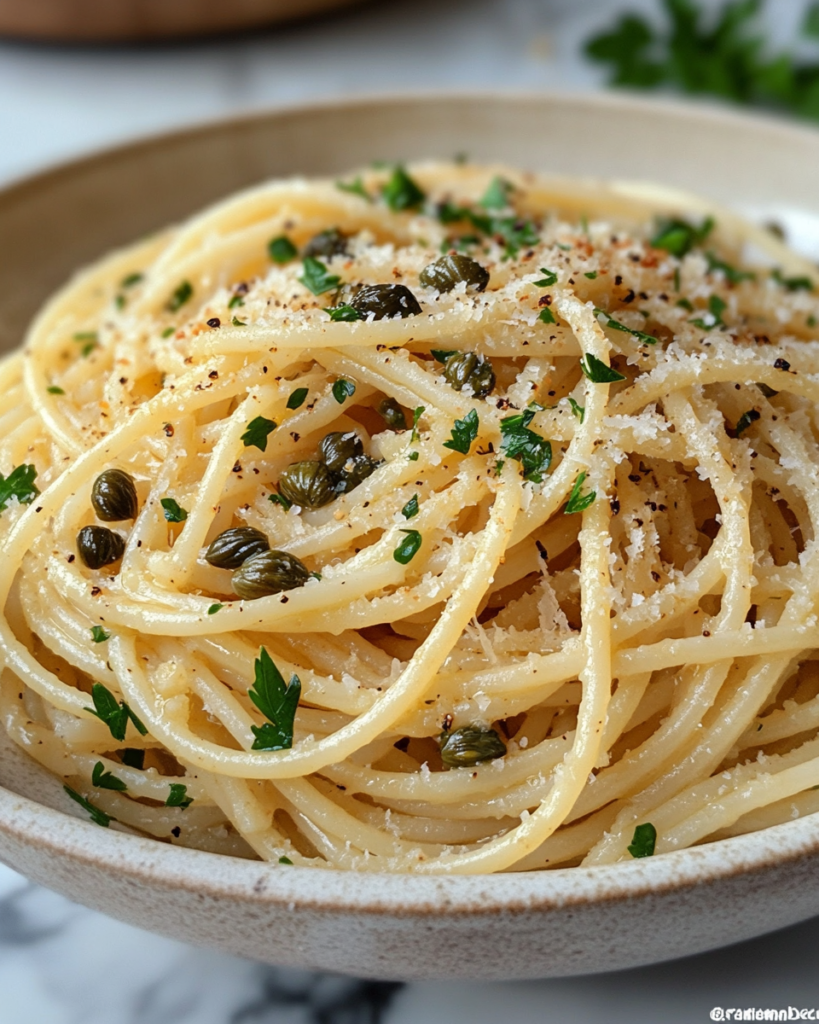
Brown Butter Garlic Spaghetti with Crispy Capers turns a short list of pantry staples into a deeply savory pasta that tastes layered and restaurant worthy while staying simple enough for a weeknight meal. Nutty browned butter coats each strand of spaghetti, garlic adds warmth and fragrance, and crisp capers bring bursts of salty contrast that cut through the richness.
This dish sits in the space between comfort food and elegant dinner cooking. Browning butter changes its flavor from mild and creamy into something toasted and rich, while capers add a sharp finish that keeps every bite balanced. The result is pasta with texture, aroma, and a satisfying contrast of crisp and silky elements.
Because the ingredient list is concise, attention to timing matters. A few extra moments on the heat can shift butter from golden and fragrant to too dark. Cooking the pasta properly and saving some starchy water ties the entire dish together into a glossy coating rather than a greasy finish.
Ingredients Overview

The foundation of Brown Butter Garlic Spaghetti with Crispy Capers is butter. Since butter carries most of the flavor, choose a high-quality unsalted version with a fresh dairy taste. As butter cooks, the milk solids toast and create a deep nutty character that gives the dish its signature richness.
Garlic plays an equally important role. Thinly sliced or finely chopped garlic gently perfumes the butter and creates a mellow savory note. Cooking garlic at moderate heat is important because garlic can shift from sweet and aromatic to bitter very quickly.
Spaghetti is ideal because its long strands hold the butter sauce evenly. Traditional dried spaghetti works particularly well because its firm texture stands up to the richness of the butter. Linguine or thin spaghetti can also work if needed.
Capers bring the contrast that defines the dish. Once fried briefly in butter or oil, they open slightly and become crisp at the edges while staying briny inside. Their salty bite balances the richness beautifully.
Fresh lemon adds brightness without overwhelming the dish. Lemon zest contributes fragrance, while a small amount of juice wakes up the butter and garlic flavors.
Fresh parsley adds color and a clean finish. Parmesan is optional but welcome for added savory depth.
For substitutions, gluten-free spaghetti can be used successfully. Salted butter works if you reduce added salt. Chives can stand in for parsley, and anchovies can be added for extra savory depth.
Ingredients
12 ounces dried spaghetti
8 tablespoons unsalted butter
3 tablespoons capers, drained and patted dry
5 cloves garlic, thinly sliced
1 teaspoon lemon zest
1 tablespoon fresh lemon juice
1/4 cup chopped fresh parsley
1/2 teaspoon kosher salt, plus more for pasta water
1/2 teaspoon freshly ground black pepper
1/4 teaspoon red pepper flakes (optional)
1/3 cup grated Parmesan cheese (optional)
1/2 cup reserved pasta water
Step-by-Step Instructions

Fill a large pot with water and season generously with salt. Bring to a rolling boil and cook the spaghetti until al dente according to package directions. The pasta should still have slight firmness in the center because it will finish cooking in the sauce.
Before draining, reserve about 1/2 cup of pasta water. Drain the spaghetti and set aside briefly.
Place a large skillet over medium heat. Add 2 tablespoons of butter. Once melted, add the capers in a single layer. Cook for about 2 to 3 minutes until they become lightly crisp and begin opening slightly. Remove them with a slotted spoon and transfer to a plate lined with paper towels.
Reduce heat slightly and add the remaining butter to the skillet. Let it melt completely. Continue cooking while swirling the pan often. The butter will foam, then gradually become golden. Watch closely for tiny brown flecks at the bottom and a toasted aroma. This stage usually takes 4 to 6 minutes.
Add the sliced garlic and cook for about 30 seconds to 1 minute. Stir continuously. The garlic should soften and become fragrant without darkening.
Add red pepper flakes if using.
Place the cooked spaghetti into the skillet and toss thoroughly. Add a splash of reserved pasta water and continue tossing until the butter coats every strand and forms a glossy sauce. Add additional pasta water in small amounts if the mixture feels dry.
Stir in lemon zest and lemon juice. Season with salt and black pepper. Taste before adding more salt because capers already contribute plenty.
Fold in most of the parsley.
Scatter the crispy capers across the pasta and toss lightly so some stay crisp.
If using Parmesan, add it off the heat and mix gently.
Serve immediately while the butter sauce remains silky and the capers maintain their texture.
Common issues are easy to avoid. If the butter becomes very dark or smells sharp, start again because burnt butter will dominate the dish. If the pasta seems oily instead of glossy, add another spoonful of pasta water and toss vigorously. If the capers soften too much, fry them briefly at slightly higher heat next time.
Tips, Variations & Substitutions
Dry capers thoroughly before cooking. Excess moisture causes splattering and limits crisping.
Do not rush the butter stage. Gentle cooking allows the milk solids to toast gradually and creates a balanced flavor rather than bitterness.
For extra texture, finish the pasta with toasted breadcrumbs. They pair beautifully with the crisp capers and deepen the contrast between soft and crunchy elements.
A seafood variation works well with sautéed shrimp or seared scallops. Add cooked seafood at the end to keep it tender.
For a vegetarian version with extra richness, finish with additional Parmesan and a spoonful of mascarpone.
For a dairy-free adaptation, use plant-based butter that browns well and omit the cheese.
Whole wheat spaghetti brings a nuttier flavor and slightly firmer texture.
Fresh herbs can shift the personality of the dish. Basil adds sweetness, while dill gives a lighter finish.
If serving guests, hold back some crispy capers and parsley for topping at the table. That final layer adds visual appeal and preserves texture.
Serving Ideas & Occasions
Brown Butter Garlic Spaghetti with Crispy Capers fits many occasions because it feels elegant without requiring hours in the kitchen.
Serve it with a crisp green salad dressed lightly with lemon and olive oil. Roasted asparagus, broccolini, or blistered green beans pair nicely with the rich butter notes.
Warm crusty bread is ideal for gathering any extra sauce from the plate.
For drinks, sparkling water with citrus works beautifully. Dry white wines such as Pinot Grigio or Sauvignon Blanc pair naturally with the buttery and briny flavors.
This pasta is excellent for relaxed dinners, date nights at home, small gatherings, and quiet weekend meals. It also works as a lighter alternative to heavier cream-based pasta dishes.
Nutritional & Health Notes
This pasta offers a balanced combination of carbohydrates, fat, and moderate protein. Spaghetti supplies energy, while butter contributes richness and satisfying texture.
Capers add strong flavor with very few calories, allowing the dish to feel full flavored without relying on large amounts of cheese or cream.
Garlic contributes aromatic depth and helps keep the ingredient list concise. Parsley and lemon provide freshness that balances the richness of the butter.
Portion size matters because butter is calorie dense. Pairing the pasta with vegetables or salad creates a more balanced meal.
Whole wheat or gluten-free pasta can fit different preferences while preserving the spirit of the dish.
FAQs
Can I prepare parts of this dish ahead of time?
Yes. You can crisp the capers and chop the parsley and garlic earlier in the day. Store the capers uncovered at room temperature so they keep their texture. Cook the pasta and brown the butter close to serving time because those elements taste strongest when fresh. If needed, the pasta can be cooked slightly under and refreshed in hot water for a minute before combining with the sauce. Fresh finishing steps keep the dish tasting lively and balanced.
What does brown butter taste like?
Brown butter tastes nutty, toasted, and richer than melted butter. As the milk solids cook, they develop deeper flavor and a warm aroma that pairs beautifully with pasta. In this recipe, brown butter acts as the sauce itself rather than simply a cooking fat. The lemon and capers balance that richness so the final result stays lively instead of heavy. Watching the color carefully is the key to reaching the ideal flavor.
Can I use another type of pasta?
Yes. Linguine, bucatini, and thin spaghetti all work nicely. Short shapes such as rigatoni or penne can also work, though the coating experience changes because the sauce clings differently. Dried pasta usually gives the most consistent texture for this style of dish. Fresh pasta cooks much faster and may absorb the butter differently, so watch timing carefully if using it.
Why are my capers not turning crispy?
Capers often stay soft if they are wet when added to the pan or if the heat is too low. Drain them thoroughly and pat dry with paper towels before cooking. Fry them briefly until they open slightly and become deeper in color. Removing them promptly also matters because residual heat continues cooking them after they leave the skillet.
Can leftovers be reheated?
Yes, though the texture changes slightly. Warm leftovers gently in a skillet over low heat with a splash of water. Stir often until the pasta loosens and the butter becomes glossy again. Avoid microwaving for too long because the sauce can separate. Fresh parsley and a small squeeze of lemon added after reheating help refresh the flavors.
Is cheese necessary in this recipe?
No. Parmesan is optional. The brown butter and capers already create a rich and satisfying flavor profile. Cheese adds another savory layer but is not required. If adding cheese, mix it in after removing the skillet from direct heat to keep the sauce smooth rather than clumpy.
How do I keep the sauce silky instead of greasy?
The reserved pasta water is the key. The starch in the water helps the butter cling to the spaghetti and creates a smooth coating. Add the water gradually while tossing continuously. Cooking over moderate heat also helps the sauce stay cohesive. Serving immediately preserves the ideal texture.