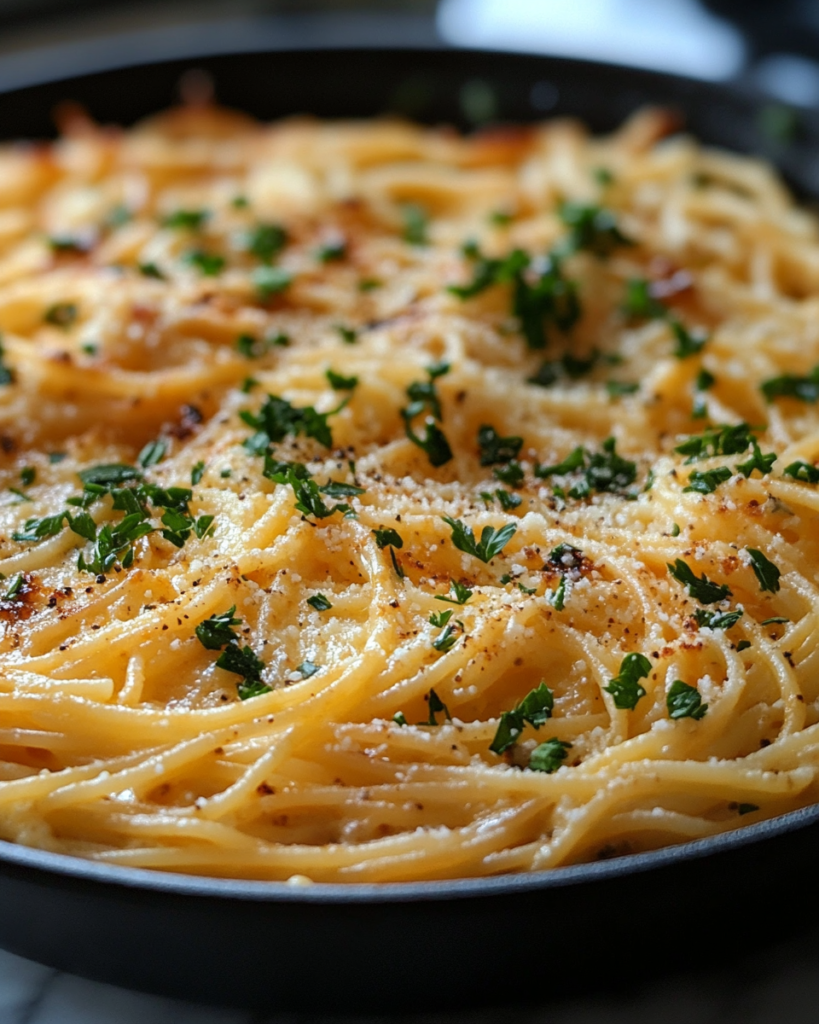
Egg & Pasta Budget Spaghetti Frittata turns a handful of pantry staples into a hearty skillet meal with crisp edges, tender strands of pasta, and a rich egg center. This dish has roots in practical home cooking where leftover spaghetti becomes the foundation for something warm, filling, and satisfying.
A spaghetti frittata is ideal for busy weekdays, low-cost meal planning, or those moments when only a few ingredients remain in the kitchen. Eggs bind the pasta together while a short stovetop cook and brief finish under heat create a golden surface and a soft interior.
Unlike heavier baked pasta dishes, this version keeps the ingredient list short and accessible. The result is a budget-friendly meal that works for breakfast, lunch, dinner, or packed leftovers.
Ingredients Overview
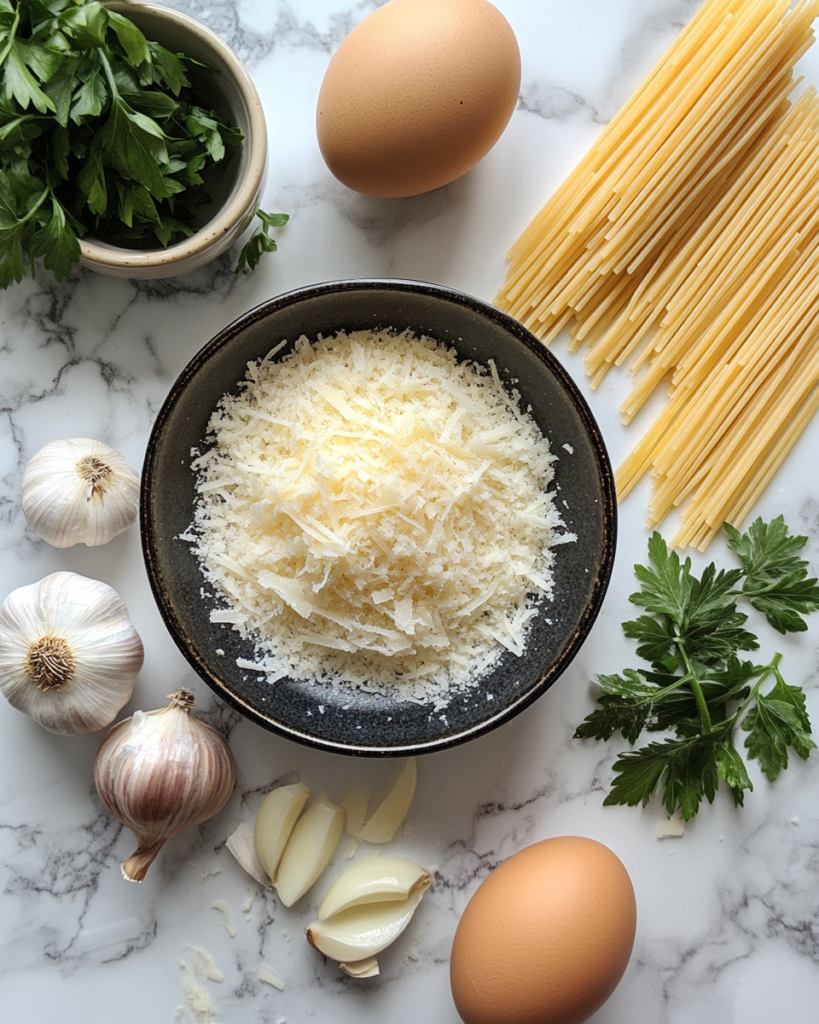
The charm of Egg & Pasta Budget Spaghetti Frittata comes from simple ingredients working together in a balanced way. Cooked spaghetti forms the structure of the dish. Slightly cooled pasta absorbs the egg mixture while still keeping distinct strands and pleasant texture after cooking.
Eggs are the heart of the recipe. They create a custard-like interior that holds the spaghetti in neat slices once cooled slightly. Using whole eggs gives richness without needing cream or additional dairy.
A small amount of onion and garlic adds depth and gentle savoriness. These ingredients soften during cooking and bring character without increasing cost. Olive oil helps crisp the outer layer and prevents sticking.
Grated cheese contributes saltiness and a lightly creamy finish. Parmesan works particularly well because a small amount adds plenty of flavor, though cheddar, pecorino, or even a modest handful of shredded mozzarella can work.
Black pepper and a small amount of salt round everything out. Since cheese can already be salty, seasoning gradually is helpful.
For substitutions, any long pasta can stand in for spaghetti. Leftover plain noodles are especially suitable. If dairy is not preferred, skip the cheese and add chopped herbs for freshness. Green onions, cooked vegetables, or a few spoonfuls of tomato sauce can also fit naturally into the dish without changing its practical spirit.
Ingredients
8 ounces dried spaghetti, cooked and cooled
6 large eggs
1/3 cup grated Parmesan cheese
1 small onion, finely chopped
2 cloves garlic, minced
2 tablespoons olive oil
1/2 teaspoon salt
1/2 teaspoon black pepper
2 tablespoons chopped parsley
2 tablespoons water
Optional: 1/4 teaspoon red pepper flakes
Step-by-Step Instructions
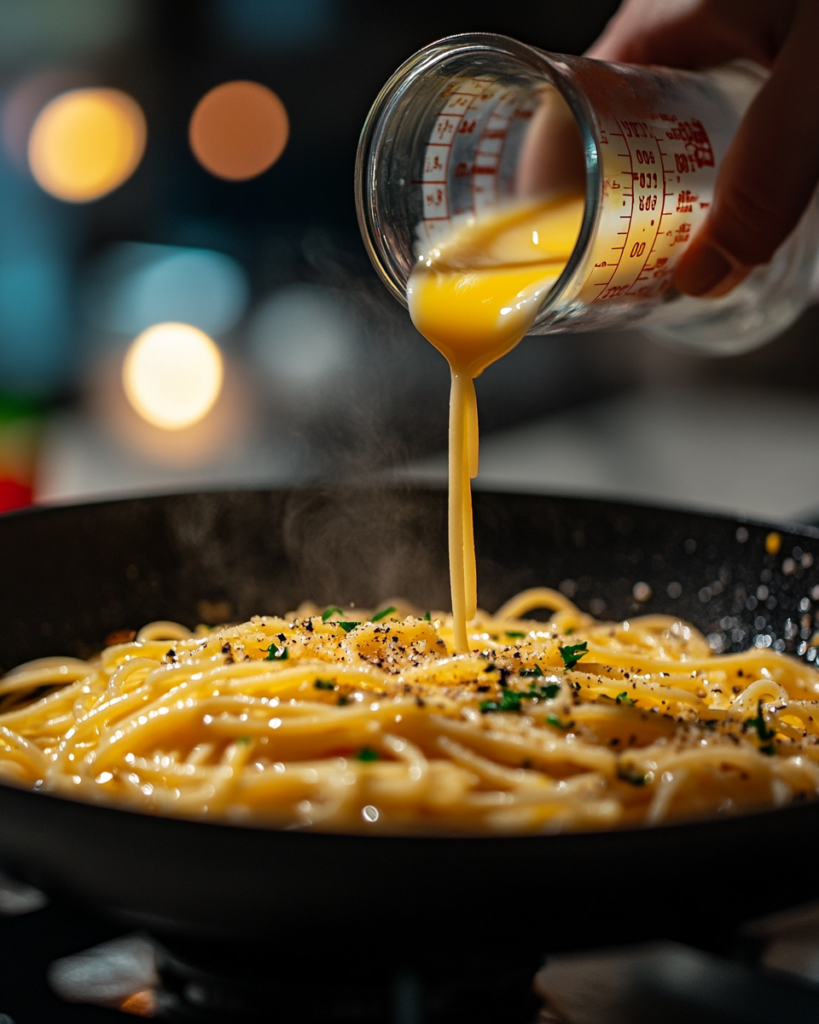
Start by cooking the spaghetti in salted boiling water until just tender. Since the pasta cooks a little further during the frittata stage, avoid very soft noodles. Drain well and spread briefly on a tray or plate so steam can escape.
Crack the eggs into a large mixing bowl. Add Parmesan, water, salt, pepper, and chopped parsley. Whisk until the mixture looks smooth and lightly frothy.
Place the cooled spaghetti into the bowl and toss gently so every strand becomes coated. The eggs should cling to the pasta rather than collect heavily at the bottom.
Warm a large nonstick or oven-safe skillet over medium heat. Add one tablespoon of olive oil. Stir in the onion and cook for around 4 minutes until softened. Add garlic and cook for another 30 seconds.
Transfer the onion mixture into the bowl with the spaghetti and combine lightly.
Return the skillet to medium heat and add the remaining oil. Pour in the spaghetti mixture and spread it into an even layer. Press gently with a spatula so the surface becomes level.
Cook without stirring for about 8 to 10 minutes. During this stage the bottom develops color and structure. Lower the heat if the edges darken too quickly.
When the outer ring appears set and the center still has slight movement, finish cooking. If using an oven-safe skillet, place under a hot broiler for 2 to 3 minutes until the surface becomes lightly golden. If not, place a large plate over the pan, carefully invert the frittata, slide it back into the skillet, and cook another 3 to 4 minutes.
The finished frittata should feel firm around the edges and spring back lightly in the center. Rest for at least 5 minutes before slicing.
A frequent mistake is using very wet pasta, which can create a loose texture. Another common issue is high heat; slower cooking creates a more even interior and crisp outer layer. Overcrowding the skillet can also prevent proper setting.
Slice into wedges and serve warm or at room temperature.
Tips, Variations & Substitutions
Egg & Pasta Budget Spaghetti Frittata adapts easily depending on what is already available at home.
Leftover spaghetti often works better than freshly cooked pasta because it has less surface moisture. If refrigerated, loosen the strands gently before mixing with eggs.
For extra flavor, stir in chopped spinach, cooked mushrooms, diced bell pepper, or small amounts of cooked vegetables. Keep additions moderate so the frittata still slices cleanly.
A dairy-free version can skip cheese entirely. Adding herbs, extra garlic, and a touch of nutritional yeast can provide added savoriness.
For a richer result, replace one whole egg with two yolks. For a lighter texture, include one additional egg white.
Different cheeses create noticeable changes. Parmesan gives sharpness, mozzarella creates stretch, and aged cheddar creates deeper savory notes.
If preparing ahead, cook the frittata fully and chill after cooling. Reheat slices in a dry skillet so the edges regain texture.
This dish also works in muffin tins for individual portions. Reduce cooking time and watch for firm centers.
Serving Ideas & Occasions
Egg & Pasta Budget Spaghetti Frittata fits comfortably into many meals throughout the day.
Serve it for breakfast with sliced tomatoes and fruit. At lunch, pair wedges with a green salad and a spoonful of marinated vegetables. Dinner portions pair nicely with roasted carrots, sautéed greens, or a bowl of simple vegetable soup.
For drinks, coffee suits morning servings while sparkling water with citrus complements lunch or evening meals.
This recipe is also practical for casual gatherings, family brunches, and weekly meal preparation. Since it tastes pleasant warm or cooled, slices travel well for packed lunches and picnic baskets.
Small wedges can even become snack portions alongside olives, cucumbers, and fresh herbs.
Nutritional & Health Notes
Egg & Pasta Budget Spaghetti Frittata offers a balanced combination of carbohydrates, protein, and moderate fat.
Eggs contribute protein along with nutrients such as choline and several vitamins. Pasta provides steady energy and turns leftovers into a filling meal rather than food waste.
Using Parmesan in moderate amounts adds flavor without requiring large quantities. Olive oil contributes richness and helps with cooking texture.
Vegetable additions can increase fiber and variety while keeping the recipe economical. A side salad or cooked greens rounds out the plate nicely.
Portion size can be adjusted depending on the meal. Smaller slices suit breakfast or snacks, while larger wedges work as a complete meal paired with vegetables.
Because ingredients remain straightforward and familiar, this recipe can fit many household cooking routines.
FAQs
Can I prepare this frittata ahead of time?
Yes. Egg & Pasta Budget Spaghetti Frittata stores very well and often slices more neatly after resting. Cook the full recipe, cool to room temperature, then refrigerate in a covered container. Individual portions can be reheated in a skillet over gentle heat or warmed briefly in the oven. Microwaving also works, though the outer texture becomes softer. For meal planning, divide into wedges and pack separately. It stays enjoyable for several days and can be served warm or chilled.
Can I use leftover pasta from another meal?
Leftover spaghetti is one of the strongest choices for this recipe. Plain pasta gives the cleanest flavor, but lightly seasoned noodles also work if they are not heavily coated in sauce. If the pasta contains a thick sauce, wipe away excess so the eggs bind properly. Break apart any clumps before mixing. Cold leftovers from the refrigerator are completely suitable and often easier to handle.
Do I need an oven to finish cooking?
No. The entire recipe can be cooked on the stovetop. Once the bottom sets, place a large plate over the skillet, flip carefully, and slide the frittata back into the pan. Continue cooking until the second side becomes lightly colored and the center feels set. This traditional skillet method creates excellent texture and avoids heating the oven.
Which pasta shapes work besides spaghetti?
Many pasta shapes work successfully. Linguine, fettuccine, angel hair, and even short shapes such as penne or fusilli can produce pleasant results. Long strands create the classic layered appearance, while shorter pasta gives a denser slice. Keep the quantity roughly equal to the recipe amount and avoid overcooked noodles that can become overly soft.
Can I freeze slices?
Freezing is possible, especially for quick meals later. Cool the slices fully, wrap individually, and place in an airtight container. Thaw overnight in the refrigerator when convenient. Reheat in a skillet or oven for improved texture. While freezing changes the texture slightly, the flavor remains enjoyable and practical for busy schedules.
How do I keep the frittata from sticking?
A reliable nonstick skillet and adequate oil help significantly. Preheating the pan before adding the mixture also supports even cooking. Avoid moving the frittata too early because the eggs need time to set. Gentle heat gives the surface time to release naturally. Resting briefly before slicing also helps the structure hold together.
Can protein be added to this recipe?
Yes. Small amounts of cooked chicken, diced ham, chopped turkey, or crumbled sausage fit naturally. Since the recipe is built around affordability, modest quantities are usually enough. Add cooked protein directly into the egg mixture before cooking. Avoid ingredients with excess moisture because they can soften the final texture.
………………..