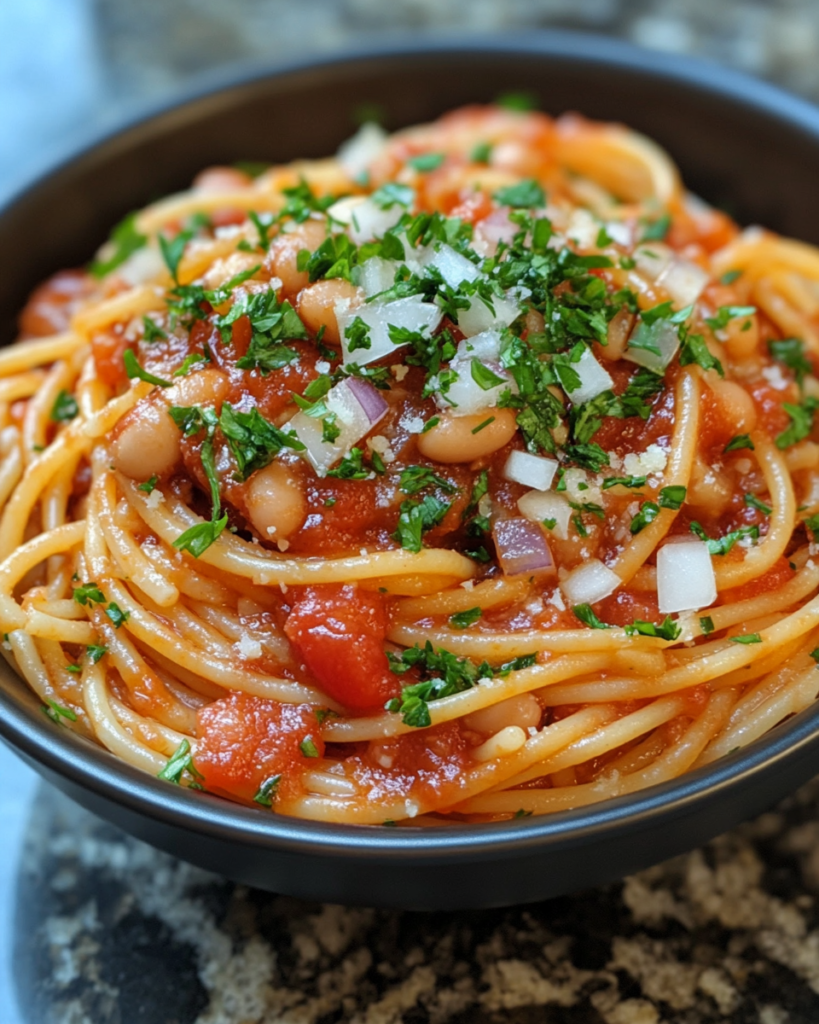
Beans & Spaghetti Budget Bowl is the kind of meal that turns a short ingredient list into a filling dinner with comfort in every forkful. Tender spaghetti, seasoned beans, onion, garlic, and a light tomato base come together in a single bowl that feels satisfying without stretching a grocery budget.
This recipe relies on pantry staples and simple preparation while still delivering rich texture and balanced flavor. The spaghetti absorbs the savory sauce, while the beans bring body and gentle creaminess. It is practical for busy evenings, meal prep, or quiet family dinners.
Ingredients Overview
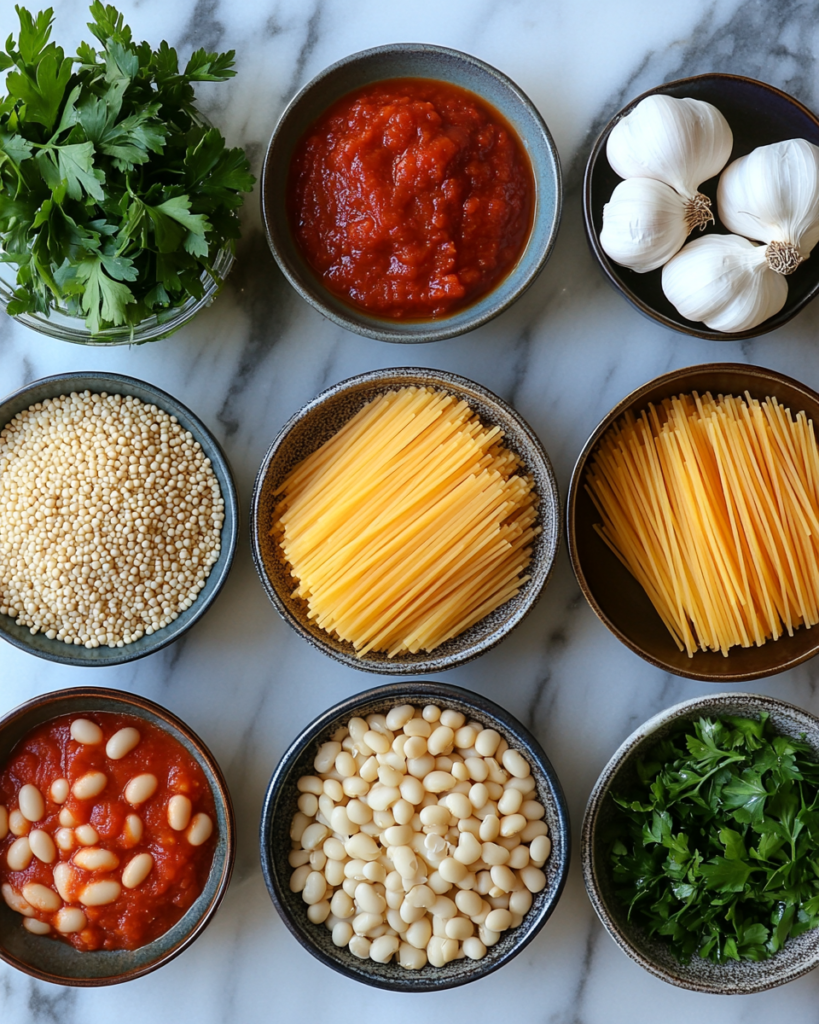
The heart of Beans & Spaghetti Budget Bowl comes from ingredients that are easy to store and easy to cook. Spaghetti forms the foundation of the dish. Long strands create a familiar texture and carry the sauce evenly throughout the bowl.
Beans add substance and protein. Cannellini beans or pinto beans both work well because they soften into the sauce while keeping enough structure to stay distinct. Canned beans reduce prep time, though cooked dried beans are equally suitable.
Onion and garlic build savory depth. Even a small quantity changes the character of the finished bowl and gives the sauce a slow-cooked feel. Olive oil helps soften the vegetables and ties the flavors together.
Crushed tomatoes create the sauce base. A modest amount keeps the dish from becoming heavy while adding acidity and color. Tomato paste adds concentration and gives the sauce more body.
Seasonings stay straightforward: salt, black pepper, dried oregano, and a touch of smoked paprika. These pantry spices support the beans without overpowering them.
Fresh parsley brightens the finished bowl and adds freshness. Grated Parmesan is optional but contributes a salty finish.
Substitutions are easy. Whole wheat spaghetti can replace regular spaghetti. Black beans can stand in for white beans for a deeper flavor. Vegetable broth may replace water if extra richness is preferred. A pinch of red pepper flakes works for gentle heat.
Ingredients
12 ounces spaghetti
2 tablespoons olive oil
1 medium yellow onion, finely chopped
3 cloves garlic, minced
2 tablespoons tomato paste
1 can (14 ounces) crushed tomatoes
2 cans (15 ounces each) cannellini beans, drained and rinsed
1 cup water
1 teaspoon dried oregano
1/2 teaspoon smoked paprika
1 teaspoon salt
1/2 teaspoon black pepper
1 tablespoon chopped fresh parsley
1/4 cup grated Parmesan cheese (optional)
Step-by-Step Instructions
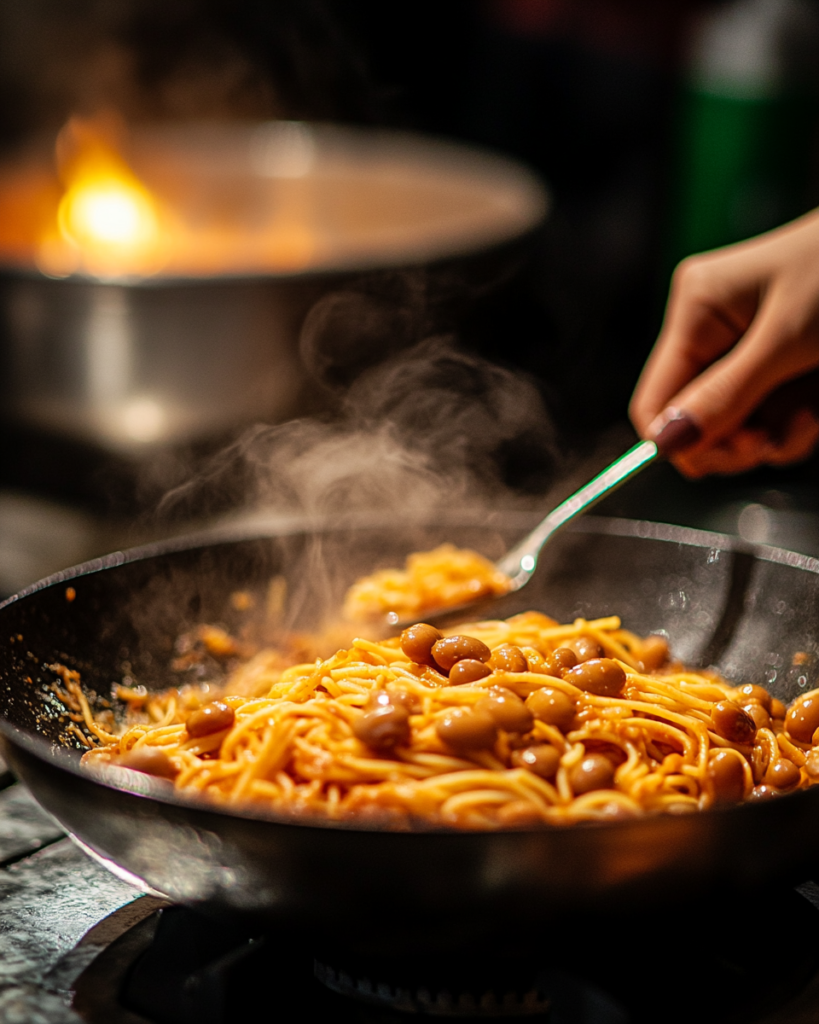
Bring a large pot of salted water to a boil. Add the spaghetti and cook until just tender according to package directions. Reserve 1 cup of pasta water before draining.
While the pasta cooks, heat olive oil in a large skillet or Dutch oven over medium heat. Add the chopped onion and cook for about 6 to 8 minutes until softened and lightly golden. Stir occasionally so the onion cooks evenly without dark edges.
Add the garlic and cook for about 30 seconds. Garlic cooks quickly, so avoid prolonged heat which can create bitterness.
Stir in the tomato paste and cook for another minute. This brief cooking period deepens the tomato flavor and gives the sauce a richer character.
Pour in the crushed tomatoes and water. Stir well and bring the mixture to a gentle simmer. Add oregano, smoked paprika, salt, and black pepper.
Add the drained beans. Stir carefully so the beans remain mostly intact. Simmer uncovered for 10 to 12 minutes. During this stage the beans absorb flavor while the sauce thickens slightly.
Transfer the drained spaghetti directly into the skillet. Toss thoroughly so the noodles become coated with sauce. Add reserved pasta water a few tablespoons at a time until the texture becomes glossy and loose rather than dry.
Continue cooking for 1 to 2 minutes. The spaghetti should absorb some of the sauce while staying separate rather than clumped.
Taste and adjust seasoning if needed. Stir in parsley just before serving.
Serve in warm bowls and finish with Parmesan if desired.
A few common issues are easy to avoid. Overcooked pasta can become soft after mixing with sauce, so cook it slightly short of fully done. Too much liquid may create a soupy bowl, while too little can cause sticking. Reserved pasta water helps balance the texture.
The finished dish should have coated noodles, tender beans, and enough sauce to gather lightly at the bottom of the bowl.
Tips, Variations & Substitutions
For extra texture, reserve a portion of the beans and mash them before stirring into the sauce. This creates a thicker finish without additional ingredients.
Whole wheat spaghetti adds a nuttier taste and slightly firmer texture. Short pasta such as penne or rotini also works if spaghetti is unavailable.
Vegetable broth can replace water for a richer result. If a stronger tomato profile is preferred, increase crushed tomatoes by half a cup and simmer a little longer.
For additional vegetables, stir in diced zucchini, chopped spinach, or shredded carrot during the simmering stage. These additions blend naturally into the dish.
Those avoiding dairy can skip Parmesan entirely. The bowl still remains flavorful because the beans and tomato base provide enough richness.
A small amount of chili flakes adds warmth without overwhelming the dish. Fresh basil can replace parsley for a softer herb note.
Meal preparation is simple with this recipe. Store portions in sealed containers for up to four days and warm gently with a splash of water.
Serving Ideas & Occasions
Beans & Spaghetti Budget Bowl pairs nicely with toasted bread, a crisp green salad, or roasted vegetables. Garlic bread brings additional comfort, while cucumber salad adds freshness.
For drinks, sparkling water with lemon works well, and unsweetened iced tea complements the savory flavors.
This dish fits many occasions. It works for weeknight dinners, student meals, relaxed family evenings, or casual gatherings where simple food feels welcoming.
Because the ingredients are inexpensive and easy to scale, it also suits batch cooking and shared meals. Leftovers warm well and maintain their texture when reheated gently.
A finishing sprinkle of parsley and cheese gives the bowl a polished appearance without additional effort.
Nutritional & Health Notes
Beans & Spaghetti Budget Bowl offers a balanced combination of carbohydrates, plant protein, and fiber. The spaghetti supplies energy, while beans contribute protein and help the meal feel filling.
Tomatoes contribute acidity and depth with relatively few calories. Onion and garlic add flavor without relying heavily on fats.
Olive oil provides richness and helps carry seasoning through the dish. Using moderate quantities keeps the bowl satisfying without becoming heavy.
Whole wheat pasta can increase fiber content, and adding vegetables raises variety and volume.
Portion size matters because pasta dishes can become larger than intended. Serving with salad or vegetables creates a balanced plate.
This meal suits many households because the ingredient list remains straightforward and adaptable.
FAQs
Can I prepare Beans & Spaghetti Budget Bowl ahead of time?
Yes. Prepare the full recipe and cool it before storing. Keep portions in sealed containers in the refrigerator for up to four days. When reheating, add a splash of water to loosen the sauce because the pasta continues absorbing moisture during storage.
If preparing specifically for later meals, cook the spaghetti slightly less than fully tender. This helps maintain texture after reheating. The flavors often deepen after resting overnight, which can create an even richer bowl.
Which beans work well in this recipe?
Cannellini beans provide a creamy texture and mild taste, but pinto beans and navy beans also perform well. Black beans create a darker appearance and slightly earthier flavor.
If using dried beans, cook them fully before adding them to the sauce. Avoid undercooked beans because they remain firm and disrupt the texture. Canned beans remain the fastest option and still produce a satisfying result.
Can I freeze this dish?
Yes, though texture changes slightly after thawing. Freeze in portions and cool completely before packaging. Use freezer-safe containers and leave a little room for expansion.
For improved texture, freeze the sauce and beans separately from cooked spaghetti. Combine with fresh pasta during reheating. Frozen portions generally keep well for about two months.
How do I stop the pasta from sticking?
Cook the spaghetti in plenty of boiling water and stir during the first minute of cooking. Drain promptly once tender and avoid rinsing.
Mixing the hot pasta directly into the sauce also helps. Reserved pasta water loosens the mixture and creates a smoother coating across the noodles.
Is this recipe suitable for meal prep?
This recipe works particularly well for meal prep because the ingredients remain stable during storage. Divide into containers after cooling.
Store toppings such as parsley or Parmesan separately and add them just before serving. Gentle reheating helps maintain texture and prevents overcooked noodles.
Can I add meat to the bowl?
Yes. Ground turkey, cooked sausage, or shredded chicken fit naturally into the recipe. Brown the meat after cooking the onion, then continue with the remaining steps.
Reduce added salt slightly if using seasoned meat. The beans still contribute texture even with meat included, so there is no need to remove them.
What should the finished texture look like?
The finished bowl should not resemble dry pasta or thin soup. The sauce should lightly coat each strand while a small amount gathers underneath.
Beans should remain intact but soft enough to press easily with a fork. The overall result should feel hearty, balanced, and comfortable to eat.