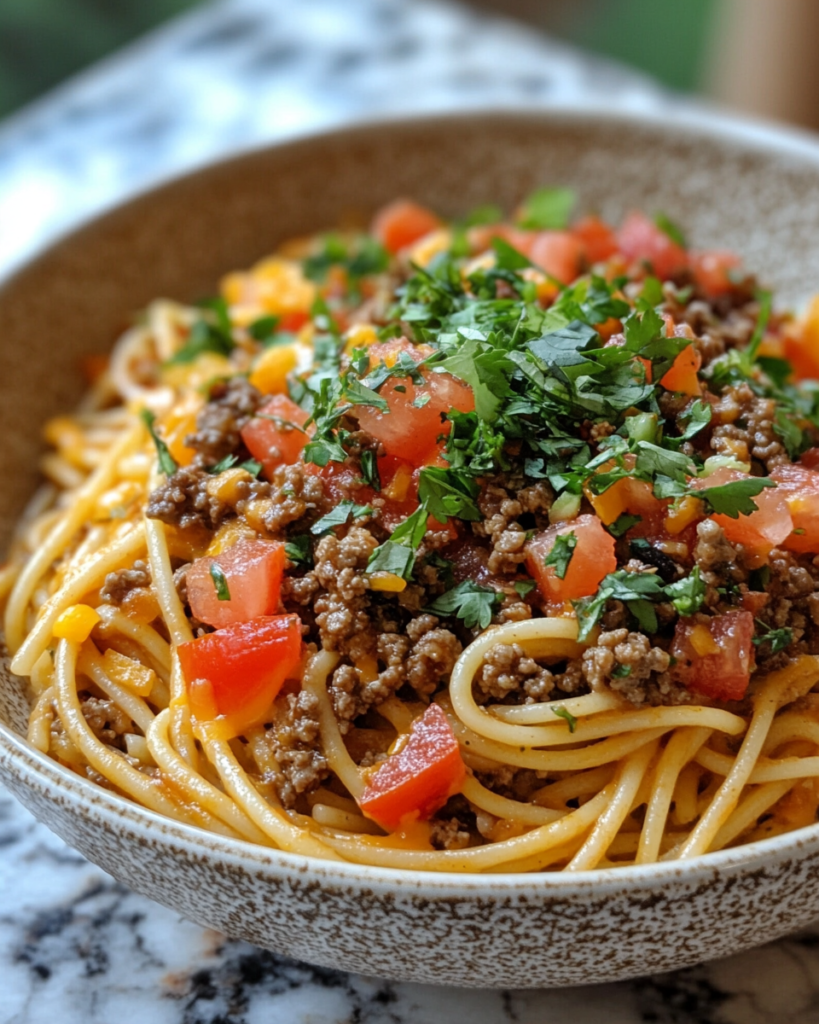
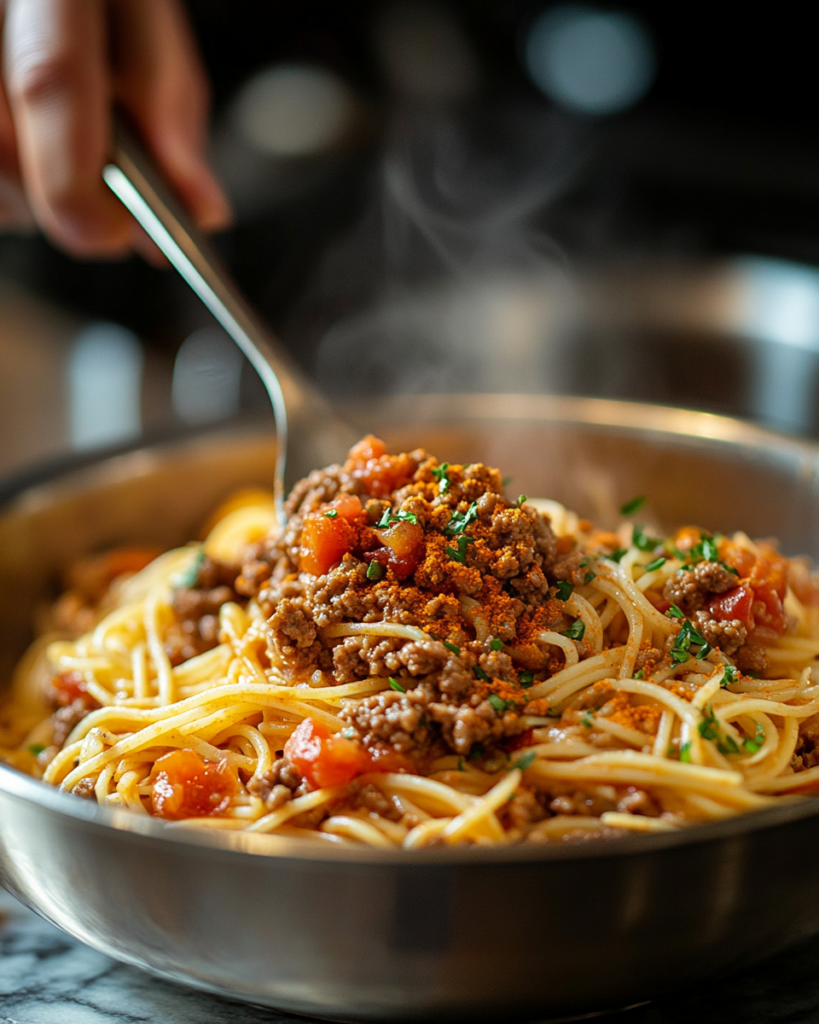
Mexican-Style Ground Beef Spaghetti brings together the comfort of a skillet pasta dinner with the bold character of a seasoned beef and tomato sauce inspired by familiar Mexican pantry staples. It blends tender spaghetti, savory ground beef, onion, garlic, tomatoes, peppers, and warm spices into a hearty meal that feels relaxed and satisfying.
This dish works well for busy evenings because everything comes together with simple ingredients and straightforward cooking. The sauce coats each strand of pasta while melted cheese and fresh garnishes add contrast and balance. The result is a dinner that feels rich and comforting without requiring complicated preparation.
Ingredients Overview
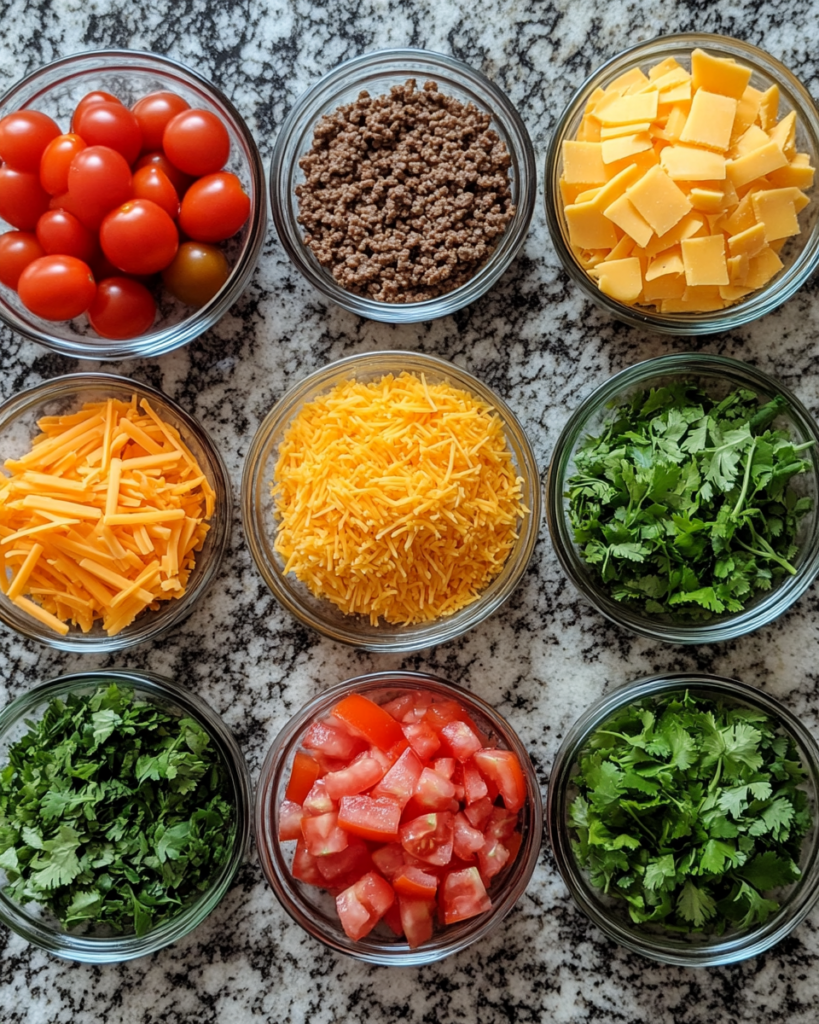
The heart of Mexican-Style Ground Beef Spaghetti is the seasoned ground beef. Ground beef brings richness and body to the sauce while also giving the finished dish enough substance to stand as a complete meal. An 85/15 blend works especially well because it stays flavorful without leaving too much excess fat.
Spaghetti creates the familiar pasta base and absorbs the seasoned tomato mixture beautifully. Cooking it just until tender helps the noodles stay intact after they are tossed with the sauce.
A combination of onion and garlic forms the savory foundation. These ingredients soften during cooking and blend into the beef while adding depth throughout the dish.
Tomatoes appear in two forms: crushed tomatoes and tomato sauce. The crushed tomatoes add texture while the smooth sauce helps coat the pasta evenly.
Bell peppers and green chiles contribute gentle sweetness and a mild kick. They bring color and a subtle freshness that balances the richness of the meat.
Spices such as chili powder, cumin, smoked paprika, oregano, salt, and black pepper create the signature character of the dish. The blend should remain balanced rather than overly hot.
Cheddar and Monterey Jack cheese melt into the hot spaghetti and add creamy texture. Fresh cilantro and lime brighten the finished plate.
If needed, ground turkey may replace beef, and gluten-free spaghetti works well. Pepper Jack cheese can replace Monterey Jack for extra heat.
Ingredients
1 pound ground beef (85/15)
12 ounces spaghetti
1 tablespoon olive oil
1 medium yellow onion, diced
1 red bell pepper, diced
3 cloves garlic, minced
1 can (14 ounces) crushed tomatoes
1 can (8 ounces) tomato sauce
1 can (4 ounces) diced green chiles
1 tablespoon chili powder
1 teaspoon ground cumin
1 teaspoon smoked paprika
1 teaspoon dried oregano
1 teaspoon kosher salt
1/2 teaspoon black pepper
1/2 cup beef broth
1 cup shredded cheddar cheese
1 cup shredded Monterey Jack cheese
2 tablespoons chopped cilantro
1 lime, cut into wedges
Step-by-Step Instructions
Begin by bringing a large pot of salted water to a boil. Add the spaghetti and cook until just tender according to package directions. Reserve about 1 cup of pasta water before draining. Set the cooked spaghetti aside.
While the pasta cooks, heat olive oil in a large deep skillet over medium heat. Add the diced onion and bell pepper. Cook for about 5 minutes until softened and lightly translucent. Stir occasionally so the vegetables cook evenly.
Add the ground beef to the skillet. Break it into small pieces using a wooden spoon. Cook for 6 to 8 minutes until browned and no pink remains. If excess grease collects in the pan, drain most of it while leaving a small amount for richness.
Stir in the minced garlic and cook for about 30 seconds until fragrant. Add chili powder, cumin, smoked paprika, oregano, salt, and black pepper. Stir continuously so the spices coat the meat mixture without scorching.
Pour in the crushed tomatoes, tomato sauce, diced green chiles, and beef broth. Stir thoroughly and bring the mixture to a gentle simmer. Reduce the heat to medium-low and cook for about 10 minutes.
The sauce should thicken slightly while remaining loose enough to coat pasta. If it becomes too thick, add a small splash of reserved pasta water.
Add the cooked spaghetti directly into the skillet. Use tongs to toss the noodles gradually through the sauce. Continue tossing until every strand is coated.
Scatter both cheeses across the surface. Cover the skillet for 2 to 3 minutes so the cheese softens and partially melts. Stir lightly to distribute the cheese through the pasta.
Taste and adjust salt if needed. Finish with chopped cilantro and serve with lime wedges.
One common mistake is overcooking the pasta before combining it with the sauce. Slightly firm spaghetti holds its texture better. Another issue is cooking the sauce too aggressively, which can dry out the meat and reduce the smooth consistency.
Serve immediately while the cheese remains soft and the sauce fully coats the noodles.
Tips, Variations & Substitutions
For richer texture, cook the beef in batches rather than crowding the pan. Browning develops deeper savory notes and keeps the meat from steaming.
If a spicier version is preferred, add chopped jalapeño with the onion and peppers. A pinch of cayenne also works, though use it carefully.
For a lighter version, swap ground beef for ground turkey or ground chicken. Since lean meats contain less fat, add an extra teaspoon of olive oil during cooking.
Vegetarians can prepare the same dish using cooked black beans and sautéed mushrooms in place of meat. The tomato and spice mixture still creates a full-bodied sauce.
Different cheeses change the final texture. Sharp cheddar adds stronger character while mozzarella creates longer cheese pulls.
Corn kernels, sliced black olives, or diced zucchini can stretch the dish for larger gatherings. Leftovers reheat well with a spoonful of water stirred in before warming.
This recipe also works as a baked casserole. Transfer the finished spaghetti into a baking dish, top with cheese, and bake at 375°F for about 15 minutes.
Serving Ideas & Occasions
Mexican-Style Ground Beef Spaghetti fits comfortably into casual family dinners, game-day meals, weekend gatherings, and relaxed potluck tables.
Serve it with warm garlic bread or toasted bolillo rolls to soak up the extra sauce. A crisp green salad with lime dressing balances the richness of the beef and cheese.
Roasted corn, black bean salad, or sliced avocado make excellent side options and bring contrast in texture.
For beverages, sparkling water with citrus, iced tea, or a chilled fruit agua fresca pair nicely with the warm spices in the pasta.
Because the dish reheats well, it is also practical for meal prep and packed lunches. The flavors settle together overnight while the pasta remains satisfying and filling.
Nutritional & Health Notes
Mexican-Style Ground Beef Spaghetti combines carbohydrates, protein, and fat into a balanced main dish. The spaghetti provides energy while the beef contributes protein and minerals.
Tomatoes, peppers, garlic, and onion add vegetables and natural sweetness. Fresh cilantro and lime contribute brightness without requiring heavy sauces.
Cheese adds calcium and richness but can be reduced if a lighter meal is preferred. Choosing leaner ground beef lowers the overall fat content.
Portion size plays a major role in balance. Serving the pasta with vegetables or salad creates a broader meal without needing a larger amount of spaghetti.
This dish can also be adapted for lower sodium needs by reducing added salt and selecting reduced-sodium canned ingredients.
FAQs
Can I prepare Mexican-Style Ground Beef Spaghetti ahead of time?
Yes. The sauce can be prepared up to two days in advance and stored in an airtight container in the refrigerator. When ready to serve, cook the spaghetti fresh and combine it with the reheated sauce. This keeps the pasta from absorbing too much liquid while stored. If storing the complete dish, reserve a little broth or water to loosen the texture during reheating. Warm it gently over medium heat and stir occasionally so the cheese blends smoothly back into the pasta.
Can I freeze this recipe?
This dish freezes well, especially when the pasta and sauce are stored separately. Let the beef mixture cool completely before placing it into freezer-safe containers. Freeze for up to three months. Thaw overnight in the refrigerator and reheat in a skillet. Freshly cooked spaghetti gives the finished meal better texture than freezing the assembled dish. Add a splash of broth during reheating if the sauce thickens too much.
Which type of ground beef works best?
Ground beef with moderate fat content usually gives the richest texture. An 85/15 ratio provides enough fat for flavor while still remaining manageable. Leaner blends work too but may need a touch more oil during cooking. Avoid very fatty blends because the sauce can become greasy after combining with pasta. Browning the meat thoroughly also contributes richer savory character.
Can I add vegetables to the sauce?
Yes. Bell peppers are already included, but zucchini, corn, mushrooms, spinach, and diced tomatoes fit naturally into the dish. Add firm vegetables earlier in the cooking process and delicate vegetables near the end. Keep the total amount moderate so the sauce still coats the spaghetti properly. Extra vegetables can stretch the meal while adding color and texture.
Is this recipe spicy?
The base recipe stays moderately seasoned rather than hot. The green chiles and spice mixture contribute warmth without strong heat. To increase spice, add jalapeño, chipotle powder, or crushed red pepper. For a milder dish, reduce the chili powder and choose mild canned green chiles. Serving lime wedges also softens the perception of heat.
What cheese melts best for this dish?
A combination of cheddar and Monterey Jack creates a creamy finish with balanced richness. Cheddar contributes sharper character while Monterey Jack melts smoothly. Oaxaca cheese is another suitable choice and pairs nicely with the Mexican-inspired seasoning profile. Add cheese after the pasta is mixed into the sauce so it melts evenly without clumping.
Can I use another pasta shape?
Yes. While spaghetti creates the signature texture, several alternatives work well. Linguine, fettuccine, penne, rotini, and shells all hold the sauce nicely. Short pasta shapes may be easier for serving large groups. Cook any substitute until just tender and avoid overcooking so the noodles remain structured after mixing with the beef sauce.