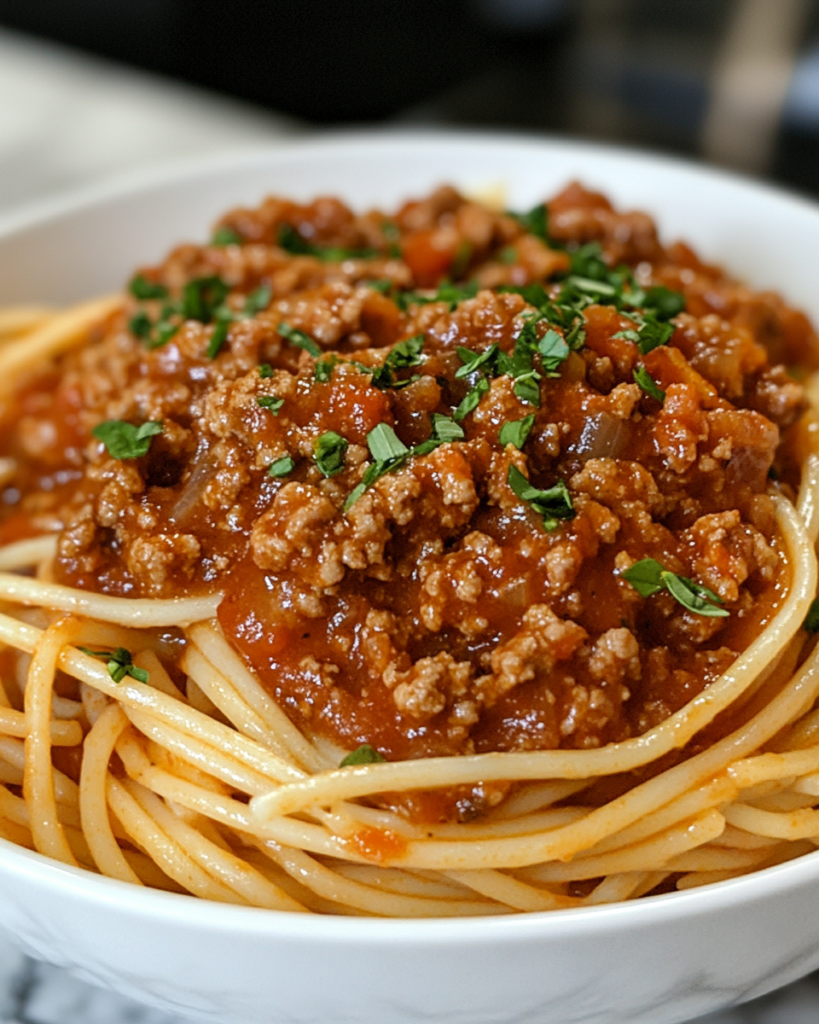
Slow Simmered Beef Meat Sauce Spaghetti is a classic comfort dish built around patient cooking and rich layers of flavor. The long cooking period gives the beef time to soften while tomatoes mellow into a deeply savory sauce that clings beautifully to every strand of spaghetti.
This style of meat sauce relies on gentle heat rather than rushed cooking. Aromatics soften slowly, beef browns fully, and the sauce reduces until it reaches a thick, silky texture. The result is a satisfying pasta dinner that feels familiar, generous, and suitable for both weeknight meals and relaxed gatherings.
A properly cooked meat sauce develops depth through simple ingredients working together. Each stage contributes to the final character of the dish, from browning the meat to allowing the tomatoes and herbs to settle into a balanced finish.
Ingredients Overview
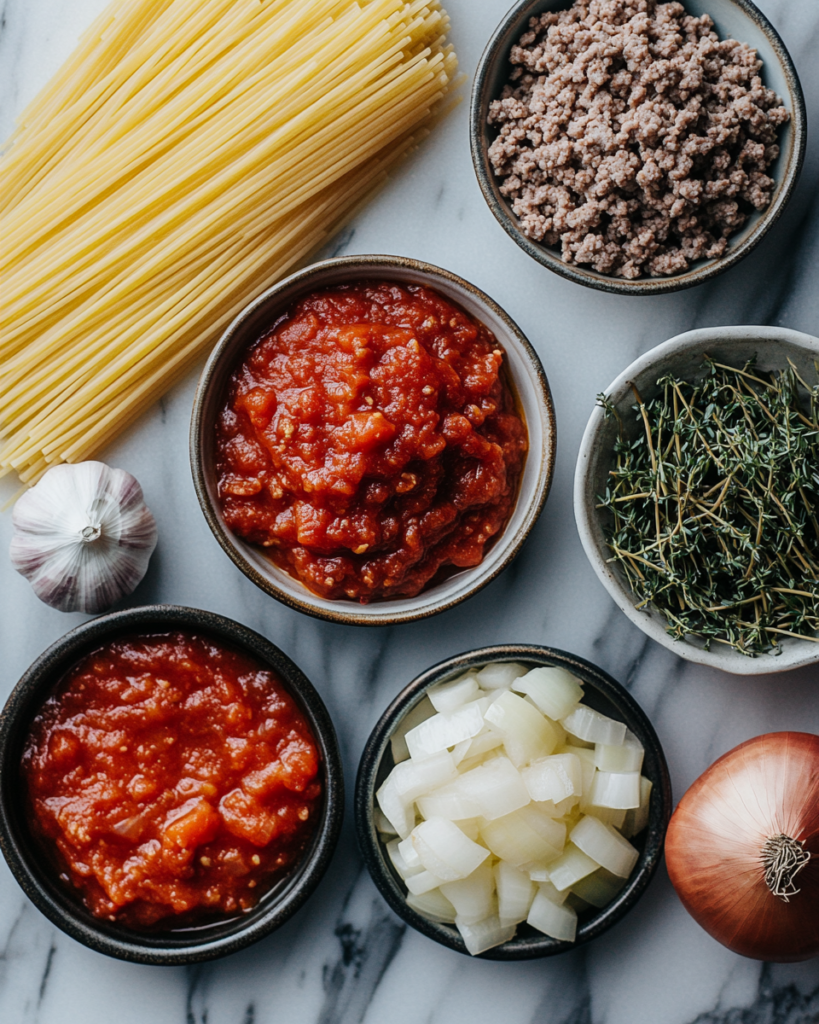
The heart of Slow Simmered Beef Meat Sauce Spaghetti is quality ground beef cooked slowly until tender and deeply savory. Ground beef with moderate fat content works especially well because a small amount of rendered fat carries flavor throughout the sauce while keeping the texture rich without becoming heavy.
Onion, carrot, and celery create the aromatic base. Finely chopping them allows the vegetables to soften and blend into the sauce rather than remain distinct. Onion brings sweetness, carrot softens tomato acidity, and celery adds gentle earthiness.
Garlic contributes fragrance and warmth. Cooking it briefly after the vegetables prevents bitterness while preserving its character.
Crushed tomatoes and tomato paste form the backbone of the sauce. Tomatoes provide brightness and body, while tomato paste contributes concentrated richness and a fuller color. A splash of beef broth supports the long simmer and helps the sauce stay smooth.
Dried oregano and basil supply classic Italian-style notes. Bay leaf brings quiet background depth during simmering. A modest amount of black pepper and salt rounds everything together.
Spaghetti serves as the ideal partner because its shape holds the sauce while remaining light enough to let the meat stand out. Fresh parsley and grated Parmesan add freshness and a savory finish.
For substitutions, ground chuck can replace regular ground beef. Crushed tomatoes may be replaced with peeled canned tomatoes crushed by hand. Vegetable broth can stand in for beef broth if preferred.
Ingredients
2 tablespoons olive oil
1 medium yellow onion, finely diced
1 medium carrot, finely diced
1 celery stalk, finely diced
4 garlic cloves, minced
1½ pounds ground beef
2 tablespoons tomato paste
2 cans (28 ounces each) crushed tomatoes
1 cup beef broth
1 bay leaf
1 teaspoon dried oregano
1 teaspoon dried basil
1 teaspoon kosher salt
½ teaspoon black pepper
½ teaspoon red pepper flakes (optional)
1 teaspoon sugar
1 pound spaghetti
½ cup grated Parmesan cheese
2 tablespoons chopped fresh parsley
Step-by-Step Instructions
Begin by placing a large heavy pot or Dutch oven over medium heat. Add olive oil and allow it to warm for about one minute.
Add onion, carrot, and celery. Cook slowly for 8 to 10 minutes, stirring occasionally. The vegetables should soften and become slightly translucent without dark browning. This stage lays the foundation for the entire sauce.
Stir in minced garlic and cook for about 30 seconds until fragrant.
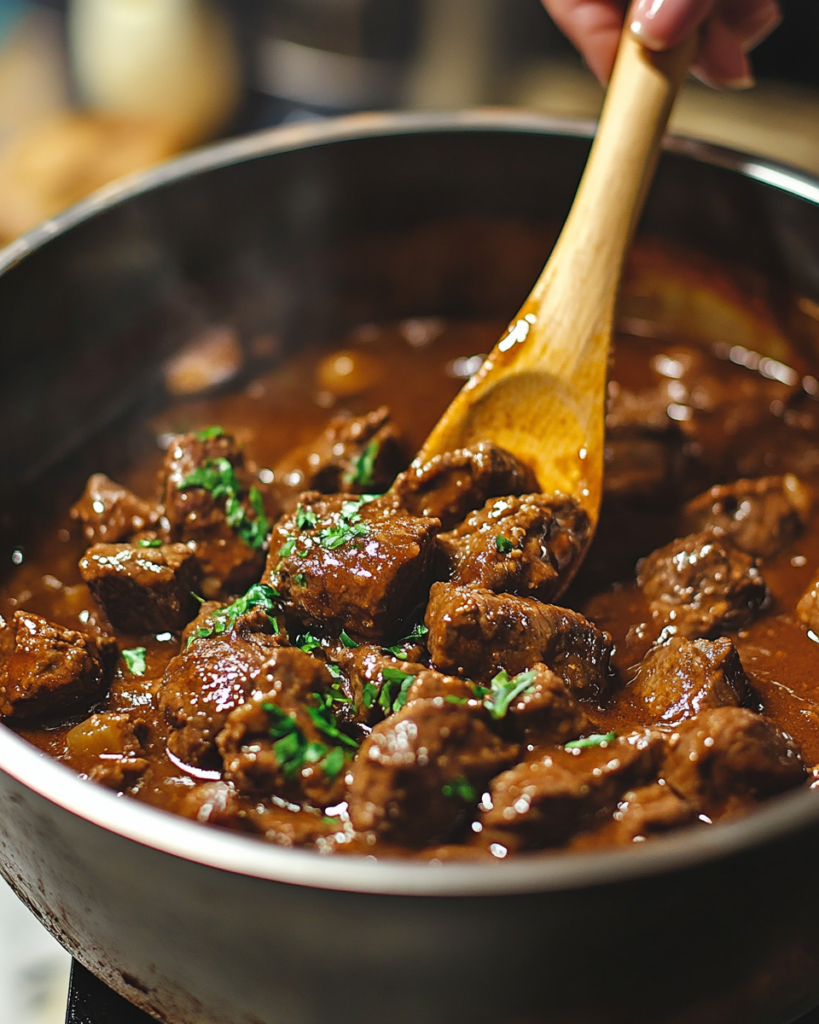
Add the ground beef. Break it into small pieces with a wooden spoon. Allow portions of the meat to contact the pot directly so light browning develops. Continue cooking for 8 to 10 minutes until no pink remains.
Stir in tomato paste and cook for 2 minutes. This brief cooking period deepens the tomato character and removes raw sharpness.
Pour in crushed tomatoes and beef broth. Add bay leaf, oregano, basil, salt, pepper, sugar, and red pepper flakes if using.
Raise the heat just until gentle bubbling begins, then lower to maintain a slow simmer. Partially cover and cook for 1½ to 2 hours.
Stir every 15 to 20 minutes. If the sauce becomes too thick before the cooking period ends, add a few tablespoons of water.
As the sauce cooks, the color deepens and the texture shifts from loose and watery to rich and spoonable. Taste during the final 20 minutes and adjust seasoning carefully.
Avoid boiling aggressively. Fast cooking can cause the sauce to separate and create tough meat. Another frequent mistake is skipping the vegetable-softening stage, which leaves harsh flavors.
Near the end of the simmer, bring a large pot of salted water to a rolling boil. Cook spaghetti according to package directions until al dente.
Reserve about ½ cup pasta water before draining.
Remove the bay leaf from the sauce. Toss spaghetti directly with a portion of the sauce. Add reserved pasta water only if needed to loosen consistency.
Plate immediately and spoon additional meat sauce over the top. Finish with Parmesan and chopped parsley.
The finished dish should display glossy strands coated in thick meat sauce with tender pieces of beef distributed evenly throughout.
Tips, Variations & Substitutions
Slow Simmered Beef Meat Sauce Spaghetti benefits from patience. If possible, prepare the sauce a day ahead and refrigerate overnight. Resting allows flavors to settle and often produces an even richer result after reheating.
For a fuller texture, combine ground beef with a small amount of ground pork. If using lean beef, add an extra tablespoon of olive oil.
For additional vegetable content, finely diced mushrooms can be cooked alongside the onion mixture. They blend into the sauce and contribute savory character.
Whole wheat spaghetti offers a nuttier finish and slightly more fiber. Gluten-free spaghetti works well if cooked carefully and served immediately.
A small splash of milk during the final 20 minutes can soften acidity and create a gentler finish. Fresh basil added at serving creates a brighter profile.
Leftover sauce stores well in an airtight container for up to four days in the refrigerator or several months in the freezer.
When reheating, warm slowly and add a spoonful of water if the sauce thickens excessively.
Serving Ideas & Occasions
Serve Slow Simmered Beef Meat Sauce Spaghetti with warm garlic bread, toasted rustic bread, or a crisp green salad dressed simply with olive oil and lemon.
Roasted vegetables such as zucchini, bell peppers, or broccoli pair naturally with the rich sauce. Parmesan on the table allows guests to finish servings according to preference.
For drinks, sparkling water, iced tea, or a dry red wine pair comfortably with the richness of the beef and tomato combination.
This dish fits casual family dinners, relaxed weekend meals, shared gatherings, and meal preparation sessions. Because the sauce can be cooked in advance, it also works well when hosting guests and keeping preparation manageable.
Serve immediately after combining pasta and sauce for the best texture.
Nutritional & Health Notes
Slow Simmered Beef Meat Sauce Spaghetti provides a balanced combination of protein, carbohydrates, and moderate fat.
Ground beef supplies protein and iron, while tomatoes contribute vitamins and naturally occurring antioxidants. Aromatic vegetables add fiber and subtle sweetness without requiring large amounts of added sugar.
Portion size has a meaningful impact on overall balance. Pairing the pasta with vegetables or salad can create a more varied meal.
Choosing lean beef reduces total fat while still producing a flavorful sauce. Whole grain pasta increases fiber content and contributes longer-lasting fullness.
Parmesan adds savory depth, so only a modest amount is usually needed.
This dish is filling and suitable as part of a varied eating pattern when served with thoughtful portions and complementary sides.
FAQs
Can I cook the sauce longer than two hours?
Yes. Slow Simmered Beef Meat Sauce Spaghetti often develops additional richness when cooked beyond two hours. Keep the heat low and stir occasionally. Add small amounts of water or broth if reduction becomes excessive. Extended cooking softens the vegetables further and allows flavors to settle together. Avoid leaving the sauce unattended for long stretches because tomato-based sauces can stick near the bottom of the pot.
Can I prepare this dish ahead of time?
This recipe works extremely well for advance preparation. Cook the sauce fully, cool it, and refrigerate in sealed containers. Reheat gently on the stovetop before serving. Prepare fresh spaghetti when ready to eat because pasta stored in sauce can soften too much. Many cooks find the sauce tastes richer after resting overnight.
Which beef works best?
Ground beef with moderate fat content generally gives the most balanced result. Very lean beef can produce a drier texture, while high-fat beef may require draining. Ground chuck is a reliable option because it remains flavorful throughout the long simmer and blends smoothly into the tomato base.
Can I freeze the meat sauce?
Yes. Cool the sauce completely before transferring it into freezer-safe containers. Leave a small amount of space for expansion. Freeze for up to three months. Thaw overnight in the refrigerator and reheat gently. Freshly cooked spaghetti gives the best serving texture after thawing.
Why does my sauce taste too acidic?
Tomato acidity can vary between brands. Cooking longer often softens sharpness naturally. Finely diced carrot contributes mild sweetness, and a small amount of sugar can help balance flavor. Avoid adding large quantities at once. Taste after simmering before making adjustments.
Can I use fresh tomatoes instead of canned?
Fresh tomatoes may be used when ripe and flavorful. Peel and crush them before cooking. Because fresh tomatoes release more moisture, simmering may take longer to reach the desired thickness. Tomato paste remains useful for body and concentrated flavor even when fresh tomatoes are used.
How do I keep spaghetti from sticking?
Use a large pot with plenty of boiling salted water. Stir during the first minute of cooking to prevent strands from clumping. Drain when al dente and toss promptly with sauce. Reserving a small amount of pasta water also helps the sauce coat the spaghetti evenly.