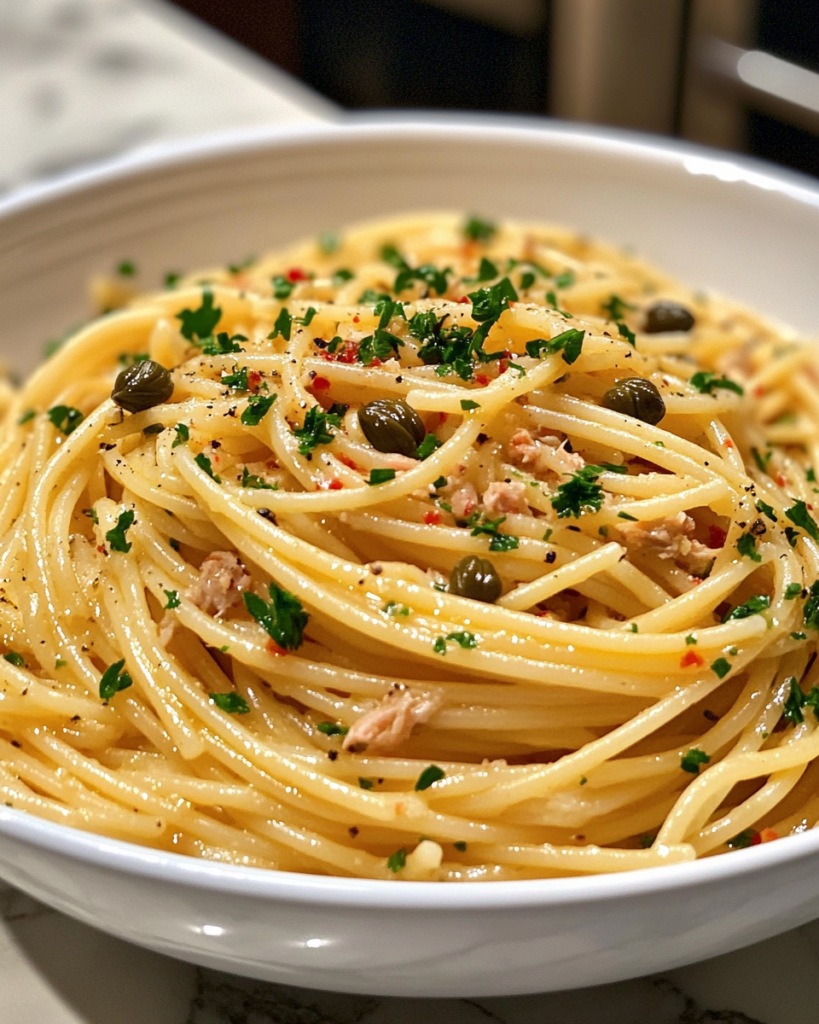
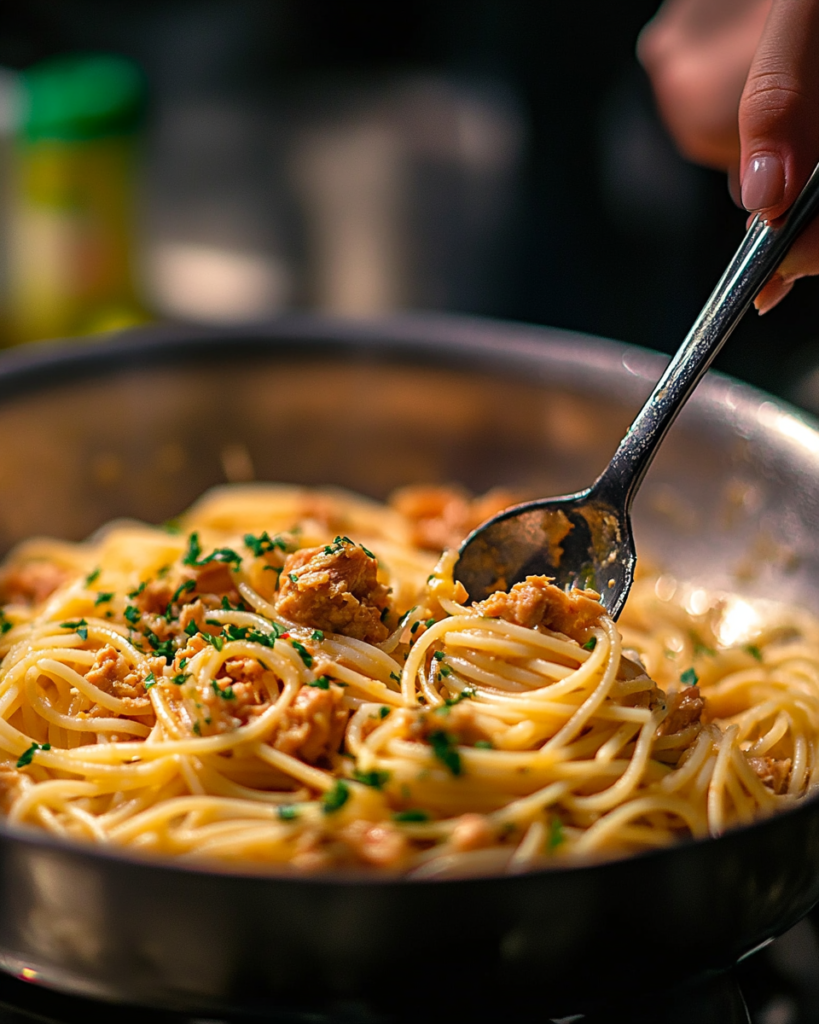
15-Minute Spaghetti with Canned Tuna & Capers is the kind of dinner that turns pantry staples into a deeply satisfying plate with very little effort. Briny capers, flaky tuna, olive oil, garlic, and hot pasta come together into a sauce that coats every strand without feeling heavy.
This Italian-inspired pantry meal is valued for its speed and balance. The tuna brings richness and protein, the capers add sharp salty notes, and a touch of lemon keeps everything bright. It works for busy evenings, late lunches, or those moments when fresh ingredients are limited but a homemade meal still sounds appealing.
Ingredients Overview
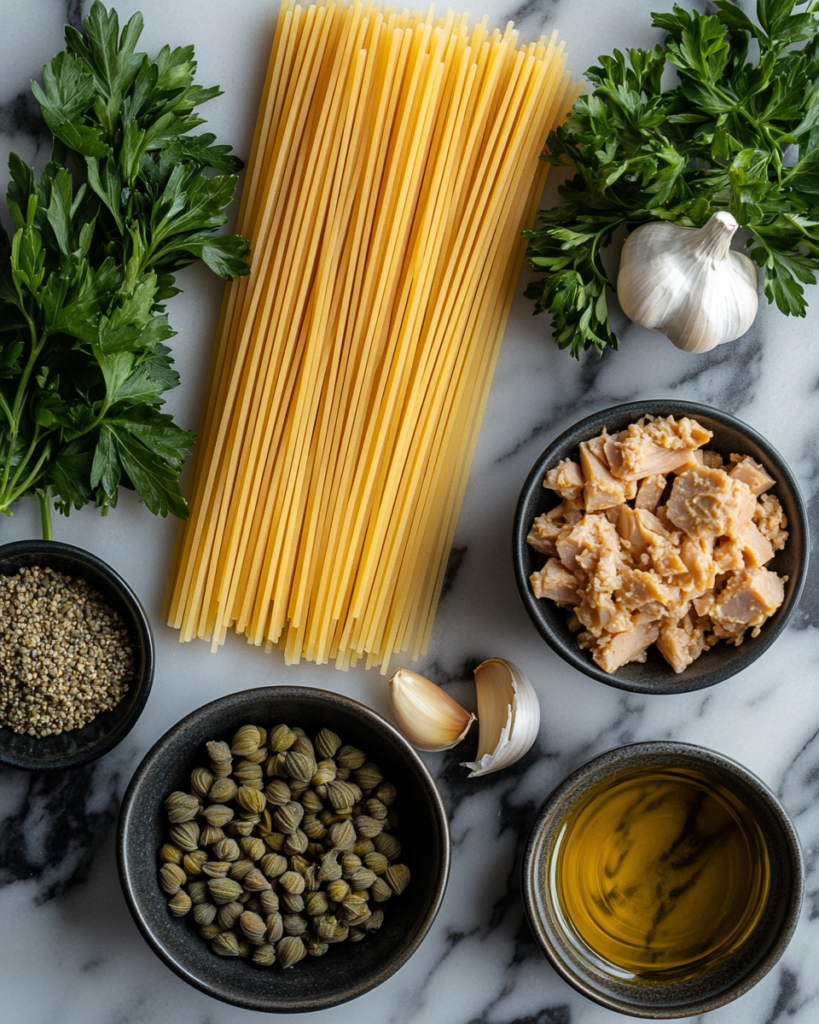
The beauty of 15-Minute Spaghetti with Canned Tuna & Capers comes from using a short list of ingredients that each contribute something distinct.
Spaghetti creates the base and carries the sauce well. A standard dried spaghetti works perfectly because it cooks quickly and keeps enough structure to hold the oil-based coating. If needed, linguine or thin spaghetti can stand in without changing the character of the dish.
Canned tuna is the centerpiece. Tuna packed in olive oil gives a richer texture and blends smoothly into the pasta, though tuna packed in water also works if drained thoroughly. The fish breaks into delicate flakes that distribute through the sauce rather than forming large chunks.
Capers bring concentrated salty flavor with gentle acidity. Rinsing them slightly softens their intensity while keeping their distinctive character. Their sharpness balances the richness of the tuna.
Garlic perfumes the olive oil and creates the foundation of the sauce. Thin slices cook quickly and become mellow rather than harsh.
Olive oil matters here because it acts as the sauce itself. A fruity extra-virgin style brings body and helps bind the pasta water into a glossy coating.
Fresh lemon zest and juice brighten the entire dish. Parsley adds freshness and color.
Red pepper flakes are optional but welcome if a little warmth is preferred. Reserved pasta water helps everything come together into a smooth finish.
Ingredients
12 ounces spaghetti
2 tablespoons kosher salt (for pasta water)
3 tablespoons extra-virgin olive oil
3 cloves garlic, thinly sliced
2 cans tuna in olive oil (5 ounces each), drained lightly
2 tablespoons capers, rinsed and drained
1/4 teaspoon red pepper flakes
1 teaspoon lemon zest
1 tablespoon fresh lemon juice
1/4 cup chopped fresh parsley
1/2 teaspoon freshly ground black pepper
2 to 4 tablespoons reserved pasta water
Optional grated Parmesan for serving
Step-by-Step Instructions
Fill a large pot with water and bring it to a rolling boil. Add the salt and cook the spaghetti according to package directions until al dente. Before draining, reserve about one cup of the cooking water.
While the pasta cooks, place a large skillet over medium heat and pour in the olive oil. Add the sliced garlic and cook for about one minute. The goal is gentle softening and fragrance rather than browning. Dark garlic can turn bitter and dominate the finished dish.
Add the capers and red pepper flakes. Stir for about thirty seconds so the capers release their aroma into the oil.
Open the tuna and add it directly to the pan. Break it into medium flakes with a spoon. Stir gently for one to two minutes. Avoid aggressive stirring because finely shredded tuna can disappear into the oil and lose texture.
Transfer the drained spaghetti into the skillet. Add two tablespoons of reserved pasta water and toss continuously. The hot starch from the water combines with the oil and creates a light coating.
Scatter in the lemon zest, lemon juice, parsley, and black pepper. Toss again until the spaghetti looks glossy and evenly coated.
If the pasta appears dry, add another splash of reserved water. If it feels too loose, cook for another thirty seconds while tossing.
Taste before adding extra salt because both tuna and capers already contribute plenty.
Serve immediately while warm.
Common problems are easy to avoid. Overcooked pasta becomes soft and loses structure. Too much lemon can overpower the tuna. Excess heat under the garlic may leave the sauce bitter. Keeping the heat moderate and timing the additions carefully gives the dish its clean, balanced flavor.
Tips, Variations & Substitutions
For richer texture, choose tuna packed in olive oil rather than water-packed versions. The extra oil blends naturally into the sauce.
Whole wheat spaghetti works well and adds a slightly nutty taste. Gluten-free pasta is also suitable, though reserving extra pasta water helps maintain texture.
Anchovies can replace part of the tuna for a stronger savory profile. Chopped green olives pair naturally with capers and add another layer of saltiness.
Fresh basil can replace parsley for a softer herbal finish. A small handful of baby spinach stirred in at the end adds color and mild sweetness.
If capers are unavailable, finely chopped olives offer a similar salty note.
For additional richness, stir in a small knob of butter right before serving.
For a lighter version, reduce the olive oil slightly and increase the lemon juice by a small amount.
Because the dish cooks quickly, preparing ingredients before starting helps keep the process smooth.
Serving Ideas & Occasions
15-Minute Spaghetti with Canned Tuna & Capers pairs nicely with simple sides that do not compete with its briny flavors.
A crisp green salad dressed with olive oil and lemon keeps the meal balanced. Roasted vegetables such as zucchini or asparagus also fit naturally beside the pasta.
Warm crusty bread works well for gathering the remaining sauce from the plate.
For drinks, sparkling water with lemon offers freshness, while chilled white wine pairs comfortably with the tuna and capers.
This dish suits weeknight dinners, quick lunches, late-evening meals, and casual gatherings. Since most ingredients are shelf stable, it is also practical for nights when shopping has been delayed.
Nutritional & Health Notes
This pasta offers a balanced combination of carbohydrates, protein, and fats.
Tuna contributes protein that helps the dish feel satisfying without relying on heavy cream or large amounts of cheese. Olive oil adds richness and supports the silky texture of the sauce.
Capers and tuna already contain sodium, so additional salt should be added carefully.
Lemon and parsley provide freshness without changing the simplicity of the dish.
Portion size matters because pasta can become filling quickly. Pairing the meal with vegetables or salad can create a more balanced plate.
Choosing whole wheat spaghetti increases fiber, while tuna packed in water lowers overall fat content.
FAQs
Can I use another pasta shape?
Yes. Linguine, bucatini, thin spaghetti, or even short pasta shapes can work. Long noodles tend to coat more evenly with the oil-based sauce, but the flavor remains pleasant across different styles. Cooking until just al dente is still important because the pasta continues to soften slightly once tossed with the warm sauce.
Can this dish be served cold?
It can. After cooking, cool the pasta slightly and add a touch more olive oil and lemon juice before serving. The result becomes closer to a pasta salad with bright, salty flavors. Fresh herbs added at the end help keep the dish lively.
Do I need tuna packed in olive oil?
No. Water-packed tuna works too. Drain it thoroughly and add an extra tablespoon of olive oil to the skillet so the sauce still coats the pasta well. Olive oil packed tuna simply creates a richer finish.
Are capers required?
Capers are a defining part of the dish, but substitutions are possible. Chopped olives provide similar salinity and acidity. If replacing them, add a slightly smaller amount first and adjust after tasting.
Can leftovers be stored?
Store leftovers in a covered container in the refrigerator for up to two days. Reheat gently in a skillet with a splash of water or olive oil. High heat can dry the tuna and soften the pasta too much.
Can I add vegetables?
Yes. Spinach, peas, zucchini ribbons, and cherry tomatoes all pair comfortably with the tuna and capers. Add quick-cooking vegetables near the end so the pasta remains fast to prepare.
Is Parmesan traditional with tuna pasta?
Opinions differ. Some prefer serving tuna pasta without cheese to keep the seafood flavor clear. Others enjoy a small amount of finely grated Parmesan. Serving it at the table allows each person to choose.
………………..