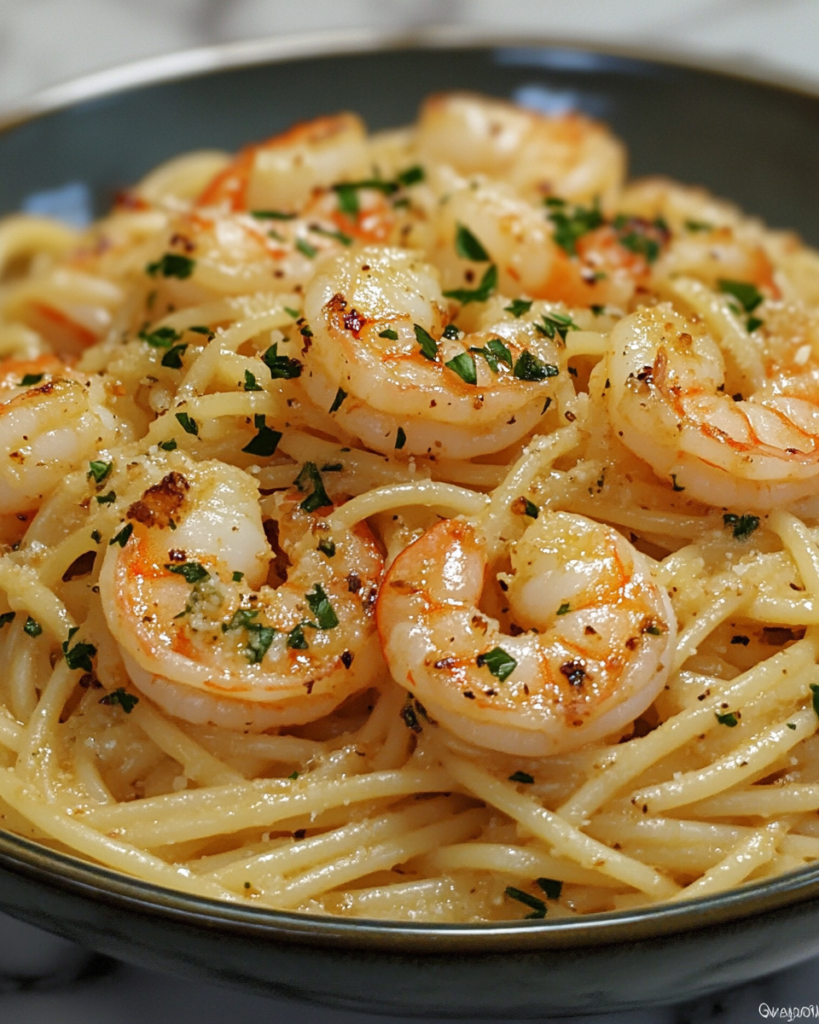
Garlic Butter Shrimp Spaghetti brings together tender shrimp, silky pasta, rich butter, and plenty of garlic in a dish that feels restaurant worthy while staying simple enough for a weeknight meal. Each strand of spaghetti becomes coated in a glossy sauce that balances savory seafood flavor with gentle richness and a bright finish.
This recipe is built around ingredients that cook quickly yet deliver layered flavor. Shrimp cooks in minutes, garlic perfumes the butter, and pasta water helps bind everything into a smooth sauce instead of a heavy coating. The result is a plate that feels satisfying without becoming overly rich.
The dish also adapts well to different kitchens and preferences. A touch of lemon keeps the sauce fresh, herbs bring balance, and small changes can shift it from casual dinner to a meal suited for guests.
Ingredients Overview

The heart of Garlic Butter Shrimp Spaghetti is the relationship between a handful of familiar ingredients. Shrimp gives the dish its signature flavor and cooks rapidly, making timing important. Medium or large shrimp work especially well because they stay tender and remain easy to distribute throughout the pasta.
Butter forms the base of the sauce. Rather than creating a thick cream sauce, butter lightly coats the spaghetti and carries the aroma of garlic. Unsalted butter offers better control over seasoning, especially since shrimp can vary in saltiness.
Garlic deserves attention here because it flavors nearly every bite. Fresh garlic gives the cleanest result and blends naturally into melted butter. Minced garlic spreads evenly through the dish and prevents large sharp bites.
Spaghetti creates structure and absorbs the sauce effectively. Long pasta shapes allow the butter mixture to cling across the strands. If needed, linguine or fettuccine can replace spaghetti with little change to cooking time.
Olive oil supports the butter during cooking and helps prevent scorching. Lemon juice cuts through richness and keeps the seafood tasting bright. Parsley contributes freshness and color.
A small amount of reserved pasta water plays an important role. The starch helps combine butter and cooking juices into a smooth finish rather than leaving oil at the bottom of the bowl.
For added depth, red pepper flakes can introduce gentle warmth, while grated Parmesan can add a savory finish if desired.
Ingredients
12 ounces spaghetti
1 pound large shrimp, peeled and deveined
3 tablespoons olive oil
6 tablespoons unsalted butter
6 cloves garlic, finely minced
1 teaspoon kosher salt
1/2 teaspoon black pepper
1/2 teaspoon red pepper flakes (optional)
1 tablespoon lemon zest
2 tablespoons fresh lemon juice
1/4 cup chopped fresh parsley
1/3 cup reserved pasta water
1/4 cup finely grated Parmesan cheese (optional)
Step-by-Step Instructions

Bring a large pot of water to a rolling boil. Add a generous amount of salt and cook the spaghetti according to package directions until al dente. Before draining, reserve about one cup of pasta water. Drain the pasta and set aside.
While the pasta cooks, prepare the shrimp. Pat them dry with paper towels. Removing surface moisture helps the shrimp cook quickly and develop better texture instead of steaming.
Season the shrimp with salt and black pepper.
Heat a large skillet over medium heat. Add olive oil and 2 tablespoons of butter. Once the butter melts and becomes lightly foamy, place the shrimp in a single layer.
Cook for about 1 to 2 minutes per side depending on size. Shrimp should turn pink and curl into a gentle C shape. If they curl tightly into circles, they have cooked too long and may become firm.
Transfer the shrimp to a plate immediately after cooking.
Reduce the heat slightly and add the remaining butter to the same skillet. Stir in the minced garlic and red pepper flakes if using. Cook for about 30 seconds to 1 minute until fragrant. Garlic should soften but not brown. Dark garlic creates bitterness that can spread through the entire sauce.
Add lemon zest and lemon juice.
Return the drained spaghetti to the skillet. Toss thoroughly so the strands absorb the butter mixture. Add a splash of reserved pasta water and continue tossing until the sauce becomes glossy and lightly coats the noodles.
Add the cooked shrimp back into the pan. Stir gently for another minute so everything warms evenly.
Scatter chopped parsley over the pasta and adjust seasoning with additional salt or pepper if needed.
If using Parmesan, sprinkle it lightly just before serving.
Serve immediately while the sauce remains smooth and warm.
Common mistakes include overcooking shrimp, using too little pasta water, or cooking garlic over high heat. Keeping heat moderate and moving quickly during the final steps gives the dish its signature texture.
Tips, Variations & Substitutions
For the richest flavor, buy raw shrimp rather than pre-cooked shrimp. Pre-cooked seafood often becomes dry when reheated.
Frozen shrimp works well if thawed completely and dried before cooking. Excess water can thin the sauce and reduce browning.
Whole wheat spaghetti creates a slightly nuttier flavor and adds extra fiber. Gluten-free spaghetti also performs well, though cooking times may vary.
For additional richness, stir in a spoonful of mascarpone cheese at the end. For a lighter version, reduce the butter slightly and increase olive oil.
Vegetables pair naturally with this recipe. Baby spinach, asparagus, peas, or cherry tomatoes can be added after cooking the garlic.
Fresh herbs can shift the character of the dish. Basil gives a softer herbal note while chives keep the flavor delicate.
Those who enjoy more warmth can increase red pepper flakes gradually.
Avoid crowding the skillet during shrimp cooking. Cooking in batches produces better texture and prevents excess moisture from collecting.
Leftovers can be reheated gently in a skillet with a spoonful of water.
Serving Ideas & Occasions
Garlic Butter Shrimp Spaghetti works well across many settings because it feels polished without requiring hours in the kitchen.
Serve it with warm crusty bread to soak up the buttery sauce. A crisp green salad with lemon vinaigrette balances the richness and keeps the meal fresh.
Roasted vegetables such as zucchini, broccoli, or asparagus also pair naturally with the seafood and garlic notes.
For drinks, sparkling water with citrus offers a clean pairing. White grape juice or chilled iced tea also complements the meal.
This pasta suits family dinners, date nights at home, casual entertaining, and weekend meals when something comforting yet polished is desired.
Present the pasta in a large serving bowl with parsley and lemon wedges for a simple but attractive finish.
Nutritional & Health Notes
Garlic Butter Shrimp Spaghetti provides a balanced combination of protein, carbohydrates, and fats.
Shrimp supplies lean protein while remaining relatively light compared with heavier meat options. It also contributes minerals such as selenium and contains little saturated fat on its own.
Spaghetti provides energy through carbohydrates and can be adjusted by selecting whole grain varieties for additional fiber.
Butter contributes richness and satisfaction, though portion awareness helps maintain balance. Olive oil adds unsaturated fats that round out the sauce.
Fresh garlic and parsley contribute flavor without adding substantial calories, allowing the dish to feel rich through technique rather than excessive ingredients.
Serving the pasta alongside vegetables creates a more balanced plate and adds texture and freshness.
FAQs
Can I use frozen shrimp?
Frozen shrimp works very well in this recipe and is often a practical choice. Thaw the shrimp overnight in the refrigerator or place sealed shrimp under cool running water for quicker preparation. After thawing, dry the shrimp thoroughly with paper towels. This step matters because excess moisture can dilute the sauce and prevent proper cooking. Cook the shrimp only until opaque and pink. Once added back to the pasta, they need only brief warming.
Can I prepare Garlic Butter Shrimp Spaghetti ahead?
This dish tastes strongest immediately after cooking because butter sauces naturally tighten as they cool. If preparing ahead, cook the pasta and shrimp separately and refrigerate them. Reheat the sauce gently in a skillet, add a splash of water, then combine everything shortly before serving. Avoid microwaving shrimp for long periods because the texture can become firm. Fresh parsley and lemon should be added at the end.
Which pasta shapes work besides spaghetti?
Although spaghetti gives the classic presentation, several shapes perform nicely. Linguine is one of the closest substitutes because its flat surface holds butter well. Fettuccine creates a slightly richer feel due to its width. Angel hair cooks rapidly and creates a lighter texture. Short pasta shapes can work but produce a different eating experience. Cooking the pasta until just al dente remains important regardless of shape.
Do I need Parmesan cheese?
Parmesan is optional. Traditional shrimp pasta dishes often rely mainly on butter, garlic, and citrus. Parmesan adds savory depth and slight richness, but the recipe still tastes complete without it. If adding cheese, use a modest amount and stir it in after reducing heat. Finely grated cheese melts more smoothly and avoids clumping. Those avoiding dairy can simply skip it and enjoy the garlic butter base.
How do I keep shrimp from becoming rubbery?
The simplest method is careful timing. Shrimp cooks quickly and usually needs only a few minutes. Watch the color and shape more than the clock. When shrimp turns pink and forms a gentle curve, remove it immediately. Carryover heat continues cooking slightly after removal. Returning shrimp only during the final mixing step keeps it tender. Using medium heat rather than intense heat also helps maintain texture.
Can I add vegetables?
Vegetables fit naturally into this recipe and create more variety. Spinach wilts directly into the hot pasta. Cherry tomatoes soften and add sweetness. Asparagus, peas, zucchini, or broccoli all pair nicely with shrimp and garlic. Cook firmer vegetables before adding garlic so timing stays balanced. Vegetables should support the sauce rather than overpower it. Keeping the overall texture light helps preserve the character of the dish.
How should leftovers be stored?
Store leftovers in an airtight container in the refrigerator for up to two days. Butter sauces tend to firm up after chilling, so gentle reheating works best. Warm the pasta in a skillet over medium-low heat with a small splash of water to loosen the sauce. Stir carefully and avoid prolonged heating. Fresh herbs or extra lemon added after reheating can refresh the flavor and restore brightness.