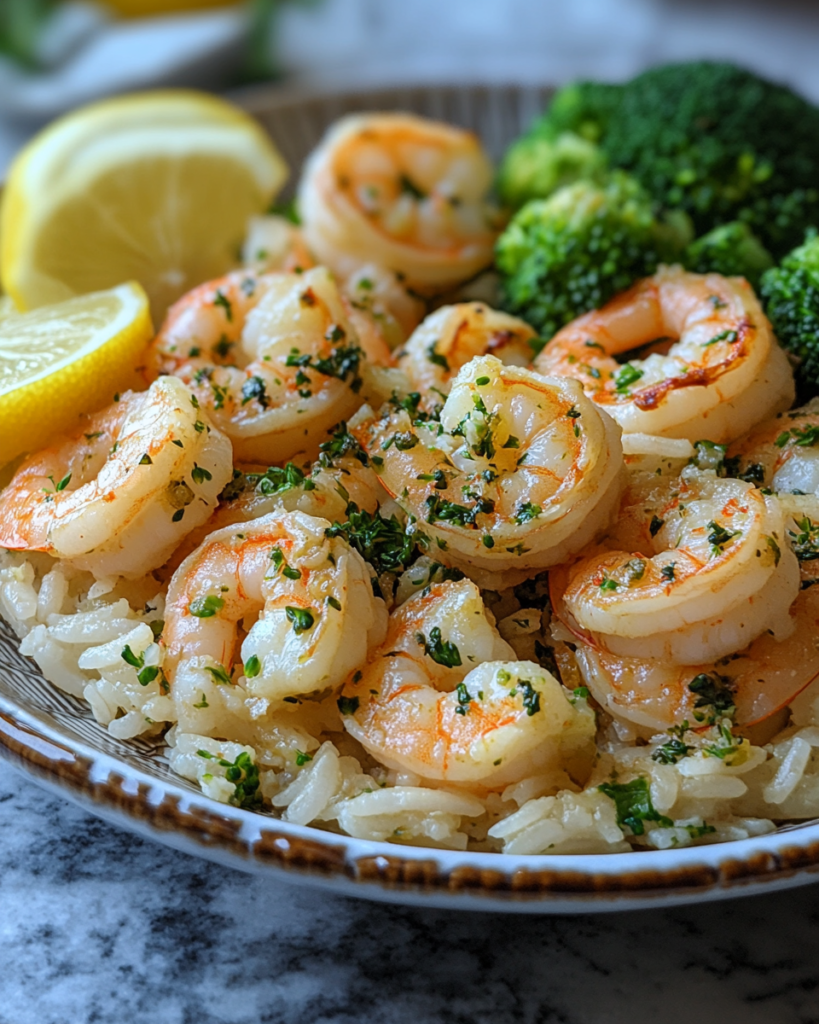
Lemon Herb Shrimp Rice Bowl brings bright citrus, tender shrimp, and fluffy rice together in a comforting dinner that fits both busy weeknights and relaxed family meals. The fresh lemon flavor pairs beautifully with garlic, parsley, and warm rice, giving every forkful a light yet satisfying character.
This bowl-style meal balances protein, grains, and fresh vegetables in a practical format that works for lunch prep or dinner service. The shrimp cook quickly, while the rice absorbs the savory juices from the skillet. Crisp vegetables add texture, and a final squeeze of lemon keeps the entire dish lively and fresh.
The dish works well throughout the year because the ingredients stay simple and widely available. It also adapts easily depending on personal taste, pantry staples, or seasonal produce. Whether served warm straight from the stove or packed for the next day, Lemon Herb Shrimp Rice Bowl delivers a fresh and comforting meal with very little fuss.
Ingredients Overview

Shrimp form the center of this recipe, bringing a delicate seafood flavor and tender texture that cook in only a few minutes. Medium or large shrimp both work nicely, though large shrimp give the bowl a slightly heartier presentation. Fresh shrimp offer a sweet flavor, while frozen shrimp remain practical for weeknight cooking. Thaw them fully and pat dry before cooking so they brown properly in the skillet.
Rice creates the hearty base of the bowl. Long-grain white rice stays fluffy and light, though jasmine rice adds a gentle floral aroma that pairs naturally with lemon and herbs. Brown rice gives the dish a slightly nutty texture and additional fiber. Leftover rice also works well because chilled grains hold their structure during reheating.
Fresh lemon juice brings brightness that balances the richness of olive oil and shrimp. Lemon zest deepens the citrus flavor without overpowering the bowl. Garlic adds savory depth, while parsley and dill contribute freshness and color. Cilantro may replace parsley for a slightly sharper herbal note.
Vegetables add contrast and texture. Cucumber gives cool crunch, cherry tomatoes provide juicy sweetness, and spinach or arugula add freshness. Avocado can be added for creaminess if desired.
Olive oil helps the shrimp brown gently while carrying the flavors of garlic and herbs throughout the dish. A small amount of butter may also be added for a richer skillet sauce. Paprika and black pepper provide mild warmth without masking the citrus flavor.
Ingredients
1 pound large shrimp, peeled and deveined
2 cups cooked jasmine rice
2 tablespoons olive oil
2 cloves garlic, minced
1 teaspoon lemon zest
3 tablespoons fresh lemon juice
1 tablespoon chopped fresh parsley
1 tablespoon chopped fresh dill
1/2 teaspoon paprika
1/2 teaspoon salt
1/4 teaspoon black pepper
1 cup halved cherry tomatoes
1 cup diced cucumber
2 cups fresh spinach
1 avocado, sliced
2 tablespoons butter
Lemon wedges for serving
Step-by-Step Instructions

Begin by preparing the shrimp. If frozen shrimp are being used, thaw them fully under cold running water or overnight in the refrigerator. Pat the shrimp dry thoroughly with paper towels. Removing excess moisture helps the shrimp brown instead of steam.
Place the shrimp in a bowl and season with paprika, salt, black pepper, lemon zest, and half of the lemon juice. Stir gently so the seasoning coats each piece evenly. Let the shrimp sit for about 10 minutes while the remaining ingredients are prepared.
Warm the cooked rice in a saucepan or microwave until hot. Fluffy rice gives the bowl structure and absorbs the flavorful juices from the shrimp. If the rice seems dry, stir in a spoonful of water before reheating.
Heat a large skillet over medium-high heat. Add olive oil and butter. Once the butter melts and begins to foam lightly, add the shrimp in a single layer. Avoid crowding the skillet because packed shrimp release moisture and lose their golden surface.
Cook the shrimp for about 2 minutes per side. They should turn pink and slightly opaque with lightly golden edges. Overcooked shrimp become firm and rubbery, so remove them from the heat as soon as they curl into a loose “C” shape.
Add the minced garlic during the final minute of cooking. Stir gently so the garlic softens without burning. Pour in the remaining lemon juice and scrape the bottom of the skillet to gather the flavorful browned bits.
Remove the skillet from the heat and stir in the chopped parsley and dill. The residual warmth softens the herbs while keeping their fresh flavor intact.
Assemble the bowls by dividing the warm rice among serving bowls. Arrange spinach, cucumber, tomatoes, and avocado around the rice. Spoon the shrimp over the top along with any lemon-herb sauce remaining in the skillet.
Finish each bowl with additional parsley and lemon wedges. Serve immediately while the shrimp remain warm and tender.
A common mistake with shrimp bowls involves adding cold vegetables directly from the refrigerator beside steaming rice. Let vegetables sit at room temperature for a few minutes before serving for better flavor balance. Another issue comes from over-seasoning with lemon juice too early, which can overpower the delicate shrimp flavor. Adding part of the lemon near the end keeps the citrus bright rather than harsh.
Tips, Variations & Substitutions
Brown rice, quinoa, or cauliflower rice all work nicely in place of jasmine rice. Brown rice creates a slightly heartier bowl, while cauliflower rice keeps the meal lighter. Quinoa adds additional texture and protein.
Chicken breast may replace shrimp for those avoiding seafood. Thin strips of salmon also pair beautifully with the lemon and herbs. For vegetarian bowls, roasted chickpeas or pan-seared tofu offer satisfying texture.
Fresh herbs give the strongest flavor, though dried herbs can work in smaller amounts when fresh options are unavailable. Basil creates a sweeter profile, while oregano introduces a Mediterranean character.
A spoonful of Greek yogurt mixed with lemon juice creates a creamy topping that pairs naturally with the shrimp and rice. Crumbled feta cheese also adds a salty finish that balances the citrus.
For additional vegetables, roasted zucchini, steamed broccoli, or shredded carrots fit smoothly into the bowl. Red onion adds sharpness, though soaking sliced onion briefly in cold water softens its bite.
Meal prep versions hold well for up to three days in airtight containers. Store avocado separately so it stays fresh longer. Reheat the rice and shrimp gently to avoid drying the seafood.
Serving Ideas & Occasions
Lemon Herb Shrimp Rice Bowl works beautifully for casual family dinners, light summer meals, and practical weekday lunches. Since the dish cooks quickly, it suits evenings when time feels limited but a fresh homemade dinner still sounds appealing.
Serve the bowl with warm flatbread or pita for a fuller meal. A side of roasted asparagus or grilled zucchini pairs naturally with the lemon flavor. Crisp green salads with cucumber and light vinaigrette also complement the shrimp nicely.
Sparkling water with lemon slices creates a refreshing pairing, while iced herbal tea works well during warmer months. For gatherings, the ingredients can be arranged buffet-style so guests build personalized bowls with their preferred toppings.
The balanced ingredients also suit lunch preparation for workdays. The rice and shrimp stay satisfying without feeling overly heavy, making the dish practical for midday meals.
Nutritional & Health Notes
Shrimp provide lean protein while remaining relatively low in fat. They also contain selenium, iodine, and vitamin B12, which contribute to a balanced diet. Pairing shrimp with rice and vegetables creates a meal with protein, carbohydrates, and fiber in one bowl.
Fresh vegetables contribute texture along with vitamins and minerals. Spinach supplies iron and folate, while tomatoes provide vitamin C and natural sweetness. Avocado contributes healthy fats that create a more satisfying texture.
Using olive oil instead of heavier sauces keeps the bowl lighter while still carrying flavor throughout the dish. Lemon juice adds brightness without relying on excess sodium or rich cream-based ingredients.
Portion size can be adjusted depending on dietary needs. Larger servings of vegetables and slightly smaller rice portions create a lighter variation, while additional rice creates a more filling dinner for active households.
Can I use frozen shrimp for this recipe?
Frozen shrimp work very well for Lemon Herb Shrimp Rice Bowl and remain a practical choice for busy schedules. The main step involves thawing them properly before cooking. Place frozen shrimp in a colander under cold running water for several minutes or thaw them overnight in the refrigerator.
After thawing, dry the shrimp carefully with paper towels. Excess moisture prevents browning and can water down the skillet sauce. Once dried and seasoned, frozen shrimp cook almost identically to fresh shrimp.
Pre-cooked shrimp are less ideal because they can become tough during reheating. Raw frozen shrimp deliver the best texture and absorb the lemon and herb flavors more effectively.
Which rice works best in shrimp bowls?
Jasmine rice remains one of the strongest choices because its soft texture and light fragrance pair naturally with lemon and herbs. Long-grain white rice also performs nicely because it stays fluffy and separate after cooking.
Brown rice gives a heartier texture and slightly nutty flavor. It also contains more fiber, making the bowl feel more filling. Quinoa offers another practical option for those seeking additional protein.
Freshly cooked rice tastes excellent, though leftover chilled rice also works well because the grains stay firm during reheating. Avoid overly sticky rice varieties because they can overpower the lighter shrimp texture.
How do I keep shrimp tender instead of rubbery?
Shrimp become rubbery mainly from overcooking. Since shrimp cook rapidly, they only need about two minutes per side in a hot skillet. Watch their appearance closely. Properly cooked shrimp turn pink and opaque while forming a gentle curved shape.
Another helpful step involves drying the shrimp thoroughly before cooking. Wet shrimp steam rather than brown, leading to uneven texture. Cooking over medium-high heat also helps create quick browning without extended skillet time.
Removing the skillet from the heat immediately after cooking keeps the shrimp tender. Residual heat continues cooking seafood briefly even after the burner is turned off.
Can this bowl be prepared ahead of time?
This recipe works nicely for meal preparation because the components store well separately. Cook the rice and shrimp ahead of time, then refrigerate them in airtight containers for up to three days.
Vegetables such as cucumber and tomatoes remain fresher when packed separately from the warm ingredients. Avocado should also be sliced shortly before serving to prevent browning.
When reheating, warm the shrimp gently in a skillet or microwave at lower power. High heat can dry out the seafood quickly. A fresh squeeze of lemon after reheating helps refresh the flavors before serving.
What vegetables pair nicely with lemon shrimp?
Cucumber, tomatoes, spinach, and avocado pair naturally with lemon shrimp because they provide freshness and texture without overpowering the seafood. Roasted vegetables also fit beautifully into the bowl.
Zucchini, asparagus, broccoli, and bell peppers all complement the citrus and herb flavors. Crisp vegetables balance the softness of the rice and shrimp, giving the bowl more texture overall.
Fresh herbs also count as an important flavor layer. Parsley, dill, basil, and cilantro each bring a different character while keeping the dish light and balanced.
Is this recipe spicy?
This recipe stays mild and citrus-forward rather than spicy. Paprika contributes gentle warmth and color without adding intense heat. The lemon and herbs remain the dominant flavors throughout the bowl.
Those who enjoy spice can add crushed red pepper flakes, diced jalapeños, or a drizzle of hot sauce before serving. A pinch of cayenne pepper added during shrimp seasoning also creates additional warmth.
If serving children or guests with varying spice preferences, keeping the base recipe mild allows each person to customize the heat level individually at the table.
Can I serve this dish cold?
Lemon Herb Shrimp Rice Bowl can be served chilled or at room temperature, particularly during warm weather. Cold rice bowls develop a refreshing character similar to grain salads while still remaining satisfying.
For cold serving, allow the shrimp and rice to cool before assembling the bowls. Tossing the rice lightly with olive oil prevents clumping during refrigeration. Additional lemon juice added before serving brightens the flavors again after chilling.
Cold versions pair especially well with cucumber, spinach, and avocado. They also travel nicely for packed lunches or outdoor meals where hot food may not be practical.