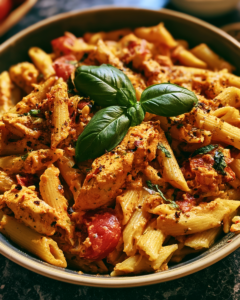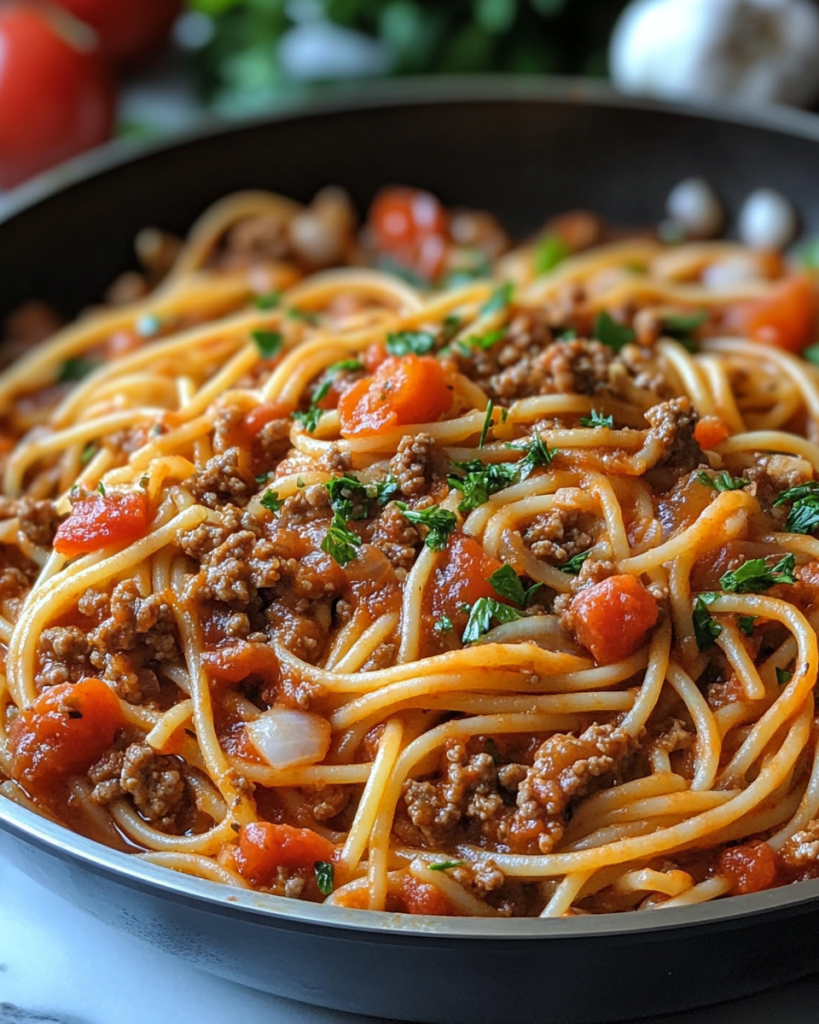
One Skillet Spaghetti with Ground Beef & Tomatoes is the kind of dinner that brings rich tomato flavor, tender pasta, and savory ground beef together in a single pan. It turns a handful of pantry staples into a satisfying meal with minimal cleanup and a cooking process that feels approachable even on busy evenings.
Cooking spaghetti directly in the skillet allows the pasta to absorb the tomato and beef flavors while creating a lightly silky sauce without extra pots or draining. The result is a balanced dish with hearty texture, bright acidity from tomatoes, and enough richness to feel comforting without becoming heavy.
Ingredients Overview

The beauty of One Skillet Spaghetti with Ground Beef & Tomatoes comes from how simple ingredients work together in one cooking vessel. Ground beef builds the savory foundation and creates flavorful drippings that season the entire dish. An 85% to 90% lean ground beef works especially well because it offers flavor without leaving too much excess fat.
Onion and garlic form the aromatic base. Cooking them briefly before adding liquids softens their sharpness and builds depth. Crushed tomatoes and diced tomatoes bring both body and texture. Crushed tomatoes create the sauce while diced tomatoes add small juicy pieces throughout the pasta.
Beef broth helps the spaghetti cook evenly while adding savory character. Water may be substituted if needed, though broth gives fuller flavor. Italian seasoning ties the sauce together with herbs that complement both tomato and beef.
Spaghetti cooks directly in the liquid, releasing starch as it softens. That starch lightly thickens the sauce and creates a smooth finish without additional ingredients.
Olive oil helps with browning and prevents sticking at the beginning of cooking. Parmesan cheese adds salty richness at the end, while fresh parsley gives color and freshness.
For substitutions, ground turkey or ground chicken can replace beef. Whole wheat spaghetti works if slightly longer cooking time is allowed. Crushed tomatoes may be replaced with tomato sauce plus a small amount of diced tomatoes to maintain texture.
Ingredients
1 tablespoon olive oil
1 pound lean ground beef
1 medium yellow onion, finely chopped
4 cloves garlic, minced
1 teaspoon kosher salt
1/2 teaspoon black pepper
1 teaspoon Italian seasoning
1/2 teaspoon paprika
1 can (28 ounces) crushed tomatoes
1 can (14 ounces) diced tomatoes with juices
3 cups low-sodium beef broth
1 cup water
12 ounces dry spaghetti, broken in half
1/2 teaspoon red pepper flakes (optional)
1/2 cup grated Parmesan cheese
2 tablespoons chopped fresh parsley
Step-by-Step Instructions

Place a large deep skillet or sauté pan over medium-high heat. Add olive oil and allow it to warm for about 30 seconds. Add the ground beef and break it apart with a wooden spoon.
Cook the beef for 5 to 7 minutes until browned and no longer pink. Stir occasionally so the meat cooks evenly. If the skillet contains excessive grease, carefully remove most of it while leaving a small amount for flavor.
Add chopped onion and cook for 3 minutes until softened. Stir in garlic, salt, black pepper, Italian seasoning, paprika, and red pepper flakes if using. Cook for another 30 seconds to release the aromas without letting the garlic darken.
Pour in crushed tomatoes, diced tomatoes with juices, beef broth, and water. Stir thoroughly and scrape the bottom of the skillet to release any browned bits.
Increase heat and bring the mixture to a gentle boil. Once bubbling, add the broken spaghetti. Press the pasta into the liquid as evenly as possible.
Reduce heat to medium-low and cover loosely. Cook for 12 to 15 minutes, stirring every 2 to 3 minutes. Stirring matters because spaghetti cooked in one skillet can clump if left untouched.
As the pasta softens, move strands around the pan and keep them submerged. If the mixture appears too thick before the pasta finishes cooking, add a splash of water.
When the spaghetti reaches an al dente texture and most of the liquid has become sauce-like, remove the lid. Continue cooking uncovered for 1 to 2 minutes if extra thickening is desired.
Turn off the heat and stir in Parmesan cheese. Allow the skillet to rest for 2 minutes so the sauce settles and coats the pasta.
Scatter parsley over the top before serving.
Common mistakes include adding pasta before the liquid reaches a simmer, which can lead to uneven cooking, or using heat that is too high and causes liquid to evaporate before the spaghetti softens. Frequent stirring and moderate heat produce the smoothest result.
Tips, Variations & Substitutions
Choose a wide skillet rather than a narrow pot. More surface area helps the spaghetti soften evenly and allows easier stirring.
Breaking the spaghetti in half makes handling simpler and reduces clumping. Stir gently so strands remain separated while cooking.
For deeper tomato flavor, add one tablespoon of tomato paste when cooking the onion and garlic. Let it cook briefly before adding liquids.
Ground turkey creates a lighter version while maintaining hearty texture. Italian sausage can replace part of the beef for a richer profile.
Vegetables fit naturally into this dish. Sliced mushrooms, chopped zucchini, spinach, or diced bell peppers can be added during cooking.
For extra richness, stir in a small splash of cream or a spoonful of mascarpone at the end.
Gluten-free spaghetti may be used, though cooking time and liquid absorption can vary. Keep additional broth nearby and monitor texture.
Fresh basil can replace parsley for a slightly sweeter herb finish.
Leftovers reheat well with a small amount of broth or water stirred in before warming.
Serving Ideas & Occasions
One Skillet Spaghetti with Ground Beef & Tomatoes works well as a complete weeknight dinner, though simple sides turn it into a fuller meal.
Serve it with garlic bread, warm breadsticks, or toasted sourdough for soaking up extra sauce. A crisp green salad with cucumbers and a light vinaigrette balances the richness of the beef and pasta.
Roasted vegetables such as broccoli, carrots, or green beans pair naturally with the tomato flavors.
For beverages, sparkling water with lemon, iced tea, or a medium-bodied red wine complement the meal nicely.
This dish fits family dinners, casual gatherings, meal prep days, and relaxed weekend meals. Since everything cooks in one skillet, it also works well when kitchen cleanup needs to stay minimal.
Nutritional & Health Notes
One Skillet Spaghetti with Ground Beef & Tomatoes offers a balance of protein, carbohydrates, and moderate fat. Ground beef contributes protein and iron, while tomatoes provide vitamins and natural acidity.
Cooking the pasta in the sauce means fewer added ingredients are required for flavor and texture. Choosing lean beef helps reduce excess fat while still delivering satisfying richness.
Whole wheat spaghetti can add additional fiber and a slightly nuttier taste. Increasing vegetables is another simple adjustment for added variety and texture.
Parmesan contributes savory character, so only a modest amount is needed.
Portion size affects the overall nutritional profile. Pairing the pasta with a salad or vegetables can create a balanced plate while keeping the meal satisfying.
FAQs
Can I prepare this recipe ahead of time?
Yes. Cook the entire skillet and allow it to cool before storing in airtight containers. Refrigerate for up to 4 days. The sauce thickens during storage because the pasta continues absorbing liquid.
When reheating, add a few tablespoons of broth or water and warm gently on the stovetop or in the microwave. Stir midway through heating so the sauce becomes smooth again. Fresh parsley and a small amount of Parmesan added after reheating help restore freshness and flavor.
Can I freeze One Skillet Spaghetti with Ground Beef & Tomatoes?
This dish freezes reasonably well, though pasta texture becomes slightly softer after thawing. Cool completely before transferring to freezer-safe containers.
Freeze for up to 2 months. Thaw overnight in the refrigerator and reheat slowly with extra broth or water.
If preparing specifically for freezing, slightly undercook the spaghetti so it finishes softening during reheating.
What type of ground beef works best?
Lean ground beef in the 85% to 90% range usually gives the best balance between flavor and texture. Very lean beef can produce a drier result, while higher-fat beef may require draining.
Ground sirloin also performs well. Browning the beef thoroughly before adding liquids creates deeper savory flavor and gives the finished sauce more character.
Can I use another pasta shape?
Yes. Short pasta shapes such as linguine pieces, fettuccine pieces, rotini, or penne can work in this method.
Different shapes absorb liquid differently, so cooking time and broth amounts may need adjustment. Keep an eye on texture and add liquid gradually if necessary.
Thin pasta generally cooks more quickly than thick pasta.
Why did my sauce become too thick?
Sauce thickness usually comes from high heat or extended cooking after the pasta becomes tender. Pasta continues absorbing moisture as it sits.
Stir in warm broth or water until the desired consistency returns. Keeping the skillet partially covered during cooking also helps retain moisture.
Avoid cooking over strong heat once the liquid begins reducing.
Can I add cheese directly into the skillet?
Yes. Parmesan melts smoothly and adds savory depth. Mozzarella creates a softer, stretchier finish.
Add cheese after removing the skillet from direct heat to prevent clumping. Stir gradually and allow residual heat to melt it evenly.
Small amounts work best so the sauce remains balanced.
How do I keep the spaghetti from sticking together?
Stir every few minutes while the pasta cooks. Move strands around the skillet and press them into the liquid.
Starting with enough broth and keeping the heat moderate helps pasta soften evenly. Breaking spaghetti in half also reduces tangling.
Once cooked, serve soon after finishing for the smoothest texture.