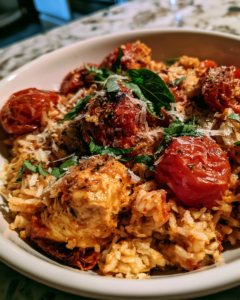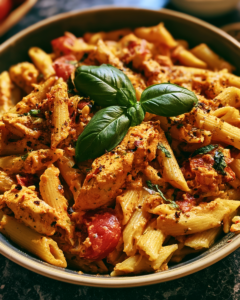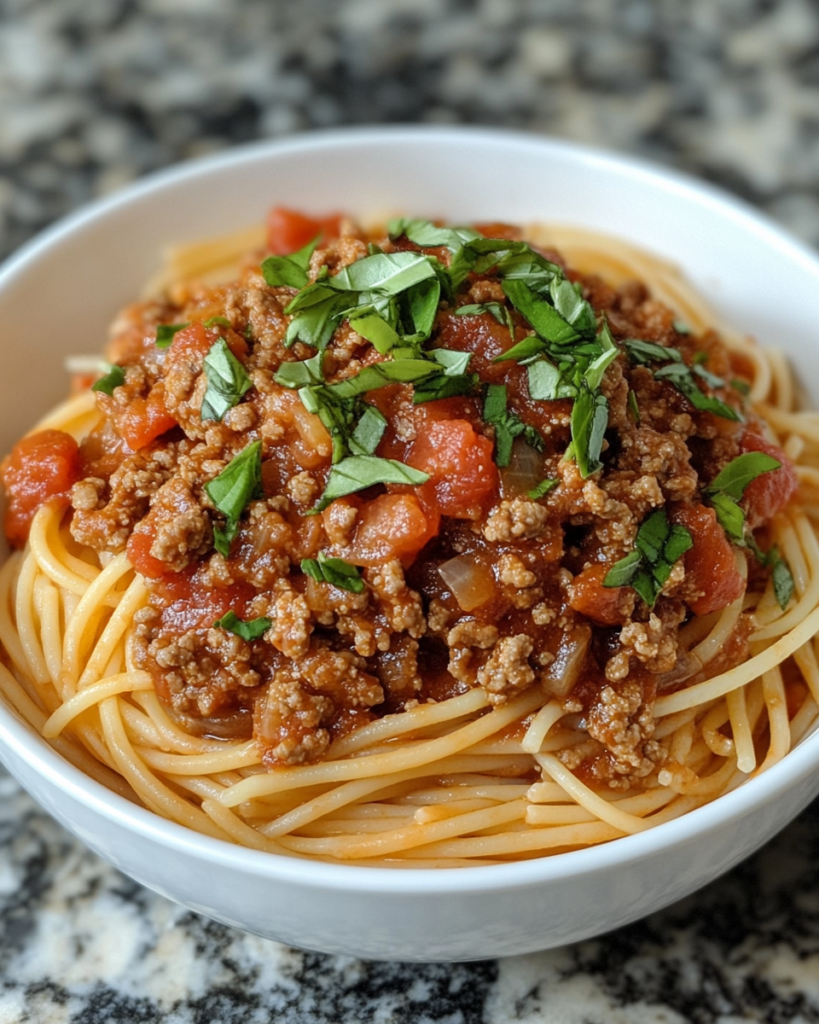
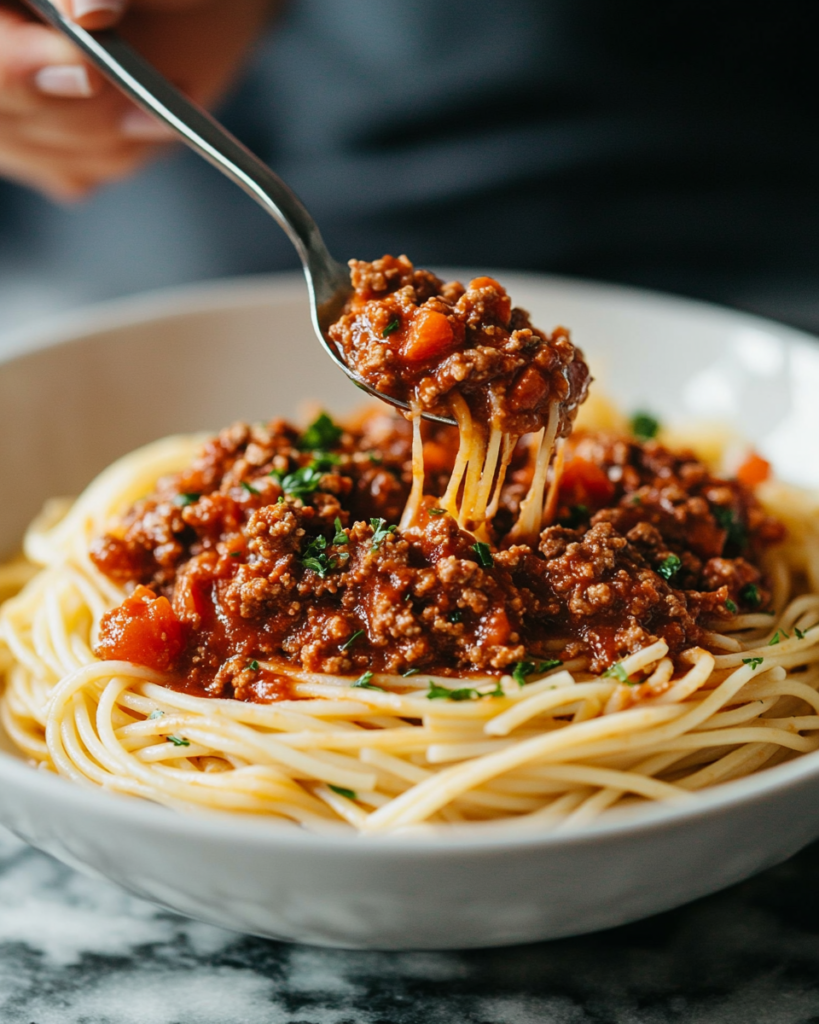
Sunday Beef Meat Sauce Over Spaghetti is the kind of slow-simmered meal that fills the kitchen with rich aroma and brings everyone to the table without calling twice. Tender ground beef, tomatoes, herbs, and a patient cooking process create a deep savory sauce that coats every strand of spaghetti.
This classic family-style pasta dinner is known for its long, gentle simmer and balanced flavor. The sauce develops body as the tomatoes cook down and the beef releases its richness into the pot. A final toss with hot spaghetti creates a comforting plate suited to relaxed weekends, family gatherings, or a quiet evening meal.
Ingredients Overview
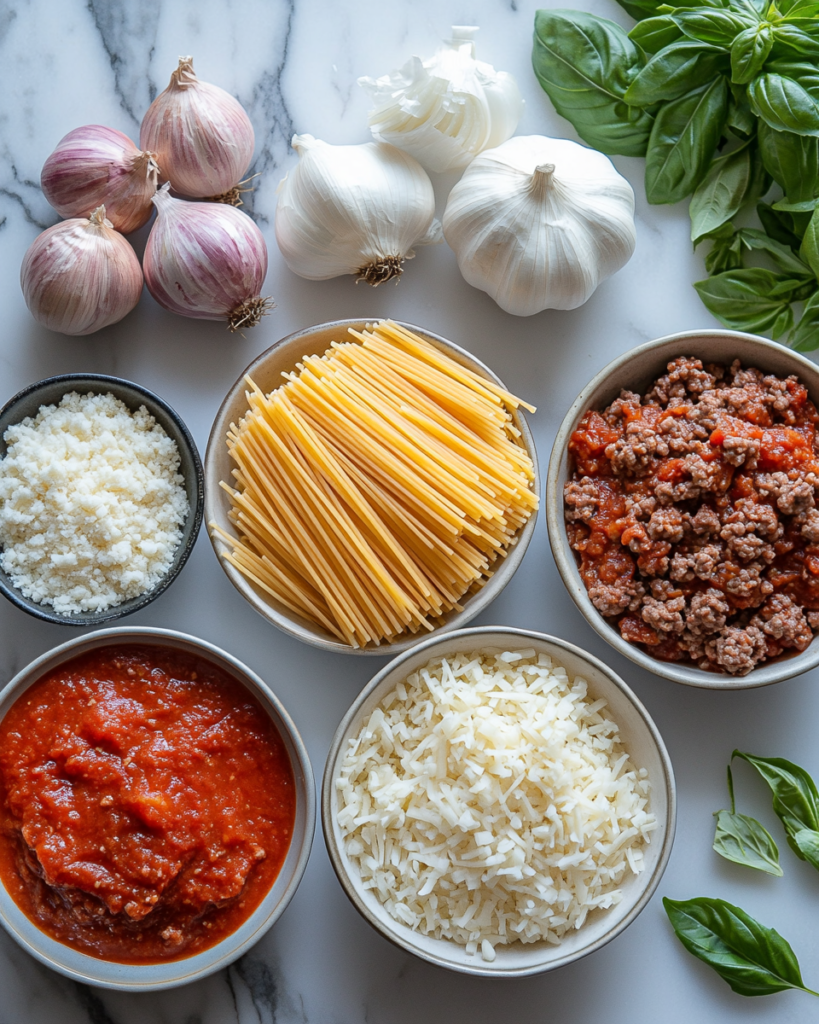
The foundation of Sunday Beef Meat Sauce Over Spaghetti begins with ground beef. An 85/15 blend gives enough richness without leaving the sauce overly heavy. During simmering, the meat breaks into tender pieces and absorbs the flavors around it.
Onion and garlic create the aromatic base. Onion softens and brings natural sweetness while garlic adds warmth and depth. Cooking both slowly at the beginning gives the finished sauce a rounded character.
Crushed tomatoes and tomato paste work together for body and concentrated flavor. Crushed tomatoes create the main texture while tomato paste deepens color and gives the sauce a longer-cooked taste even before the full simmer is complete.
Beef broth loosens the sauce and carries savory notes throughout the pot. Italian seasoning, basil, oregano, and black pepper round out the flavor profile. A small amount of sugar can soften tomato sharpness when needed, although many cooks leave it out if their tomatoes are naturally balanced.
Spaghetti is chosen because its long strands capture the sauce beautifully. Cooking pasta until just tender helps it finish properly once combined with the meat sauce.
Substitutions remain simple. Ground chuck can replace standard ground beef. Crushed tomatoes can be swapped with whole canned tomatoes crushed by hand. Gluten-free spaghetti works well, and fresh basil can replace dried herbs during the final minutes of cooking.
Ingredients
2 tablespoons olive oil
1 medium yellow onion, finely diced
4 cloves garlic, minced
2 pounds ground beef (85/15)
2 tablespoons tomato paste
2 cans (28 ounces each) crushed tomatoes
1 cup beef broth
1 tablespoon dried Italian seasoning
1 teaspoon dried oregano
1 teaspoon dried basil
1 teaspoon kosher salt
1/2 teaspoon black pepper
1 teaspoon granulated sugar (optional)
1 bay leaf
1 pound spaghetti
1/2 cup grated Parmesan cheese
2 tablespoons chopped fresh parsley
Step-by-Step Instructions
Place a large heavy pot or Dutch oven over medium heat. Add olive oil and allow it to warm for about one minute. Add diced onion and cook for 6 to 8 minutes until softened and lightly golden around the edges. Stir occasionally so the onion cooks evenly.
Add garlic and cook for 30 seconds. Avoid extended cooking at this stage because garlic can become bitter quickly.
Add ground beef. Break it apart with a wooden spoon and cook for 8 to 10 minutes until no pink remains. Continue stirring so the meat browns rather than steams. If excess fat collects in the pot, carefully remove most of it while leaving a small amount for richness.
Stir in tomato paste and cook for 2 minutes. This brief cooking period deepens the tomato flavor.
Pour in crushed tomatoes and beef broth. Add Italian seasoning, oregano, basil, salt, black pepper, optional sugar, and bay leaf. Stir thoroughly and bring the mixture to a gentle bubble.
Lower heat to maintain a slow simmer. Partially cover and cook for 90 minutes to 2 hours. Stir every 20 minutes so the sauce cooks evenly and does not stick near the bottom. During this stage the texture thickens and the flavors settle together.
As the sauce simmers, bring a large pot of salted water to a boil. Cook spaghetti according to package directions until just tender. Reserve 1 cup of pasta water before draining.
Remove the bay leaf from the sauce. Taste and adjust salt if needed.
Transfer cooked spaghetti directly into the sauce or serve the sauce over individual portions. Add small splashes of reserved pasta water if the sauce feels too thick.
Finish with Parmesan and fresh parsley.
Common problems are easy to avoid. Watery sauce usually means the simmer was too short or the pot remained fully covered. Dry sauce often means heat was too high or liquid reduced too quickly. Overcooked pasta can become soft after combining with hot sauce, so stopping at just tender helps maintain texture.
Tips, Variations & Substitutions
For deeper flavor, prepare the sauce a day ahead and refrigerate overnight. Reheating allows the ingredients to settle into a richer finished dish.
If a chunkier texture is preferred, combine crushed tomatoes with diced tomatoes. For a smoother sauce, use an immersion blender briefly before adding cooked beef back into the pot.
Ground sirloin creates a slightly leaner version. Ground turkey also works and produces a lighter finish. Italian sausage can replace part of the beef for a more robust profile.
Fresh herbs added at the end create brighter notes than dried herbs cooked throughout the simmer.
A splash of milk stirred into the sauce during the final 15 minutes can soften acidity and create a silkier texture.
For extra vegetables, finely chopped carrots or celery may be cooked with the onion. Mushrooms also blend naturally into the sauce and add earthy character.
Leftovers store well in the refrigerator for up to four days. The sauce may also be frozen in portions and reheated gently on the stove.
Serving Ideas & Occasions
Sunday Beef Meat Sauce Over Spaghetti pairs naturally with warm garlic bread, toasted country bread, or a crisp green salad with vinaigrette. Roasted vegetables such as zucchini, carrots, or broccoli bring balance beside the rich sauce.
For drinks, sparkling water with lemon, iced tea, or red grape juice complement the savory profile.
This meal fits family dinners, relaxed weekends, casual gatherings, and colder evenings when a slow-cooked dish feels especially welcome. Large batches also work for meal preparation because the sauce reheats beautifully.
Serve in wide bowls with extra Parmesan available at the table so each serving can be finished individually.
Nutritional & Health Notes
Sunday Beef Meat Sauce Over Spaghetti offers a balanced combination of protein, carbohydrates, and moderate fat. Ground beef contributes protein and iron, while tomatoes supply vitamin C and naturally occurring antioxidants.
Choosing leaner beef lowers overall fat while maintaining hearty texture. Whole wheat spaghetti increases fiber and can create a more filling meal.
Portion balance matters with pasta dishes. Pairing generous sauce with moderate pasta and adding vegetables creates a more rounded plate.
Parmesan contributes additional flavor, which often allows smaller amounts to feel satisfying. Homemade sauce also provides control over sodium and ingredient choices compared with many prepared sauces.
FAQs
Can I cook the sauce for longer than two hours?
Yes. A longer simmer can create deeper flavor and a thicker texture. Keep the heat low and stir occasionally so the bottom remains clean. If the sauce reduces more than desired, add small amounts of broth or water during cooking. Three hours is often enough for a rich, slow-cooked result without losing freshness in the tomato flavor.
Can I prepare Sunday Beef Meat Sauce Over Spaghetti ahead of time?
This recipe works very well for advance preparation. Cook the sauce fully, cool it, and refrigerate it in a sealed container. Reheat slowly on the stove and cook fresh spaghetti before serving. Many cooks enjoy the flavor even more the following day because the ingredients settle together during storage.
Which type of beef works the most smoothly?
Ground beef with moderate fat content, such as 85/15, gives a balanced result. Leaner cuts produce less richness and may need a little olive oil added later. Higher-fat blends can create excess grease. Browning the beef thoroughly before simmering contributes deeper flavor.
Can I freeze the sauce?
Yes. Cool the meat sauce completely before transferring it into freezer-safe containers. Freeze for up to three months. Thaw overnight in the refrigerator and warm gently on the stove. Freshly cooked spaghetti usually provides the most satisfying texture after reheating.
Why does my sauce taste acidic?
Tomatoes vary in natural sharpness. A longer simmer often softens acidity. Some cooks add a small amount of sugar, while others stir in a splash of milk near the end of cooking. Avoid adding large amounts because the goal is balance rather than sweetness.
Can I use another pasta shape?
Certainly. While spaghetti is traditional for this style of meal, linguine, fettuccine, rigatoni, penne, and bucatini all pair well with beef sauce. Short pasta shapes catch chunks of meat especially well and can create a slightly different eating experience.
How do I keep spaghetti from sticking together?
Use a large pot with plenty of boiling water and stir during the first minute of cooking. Drain promptly once tender and combine with sauce soon after cooking. A small amount of reserved pasta water helps the sauce cling naturally without becoming heavy.