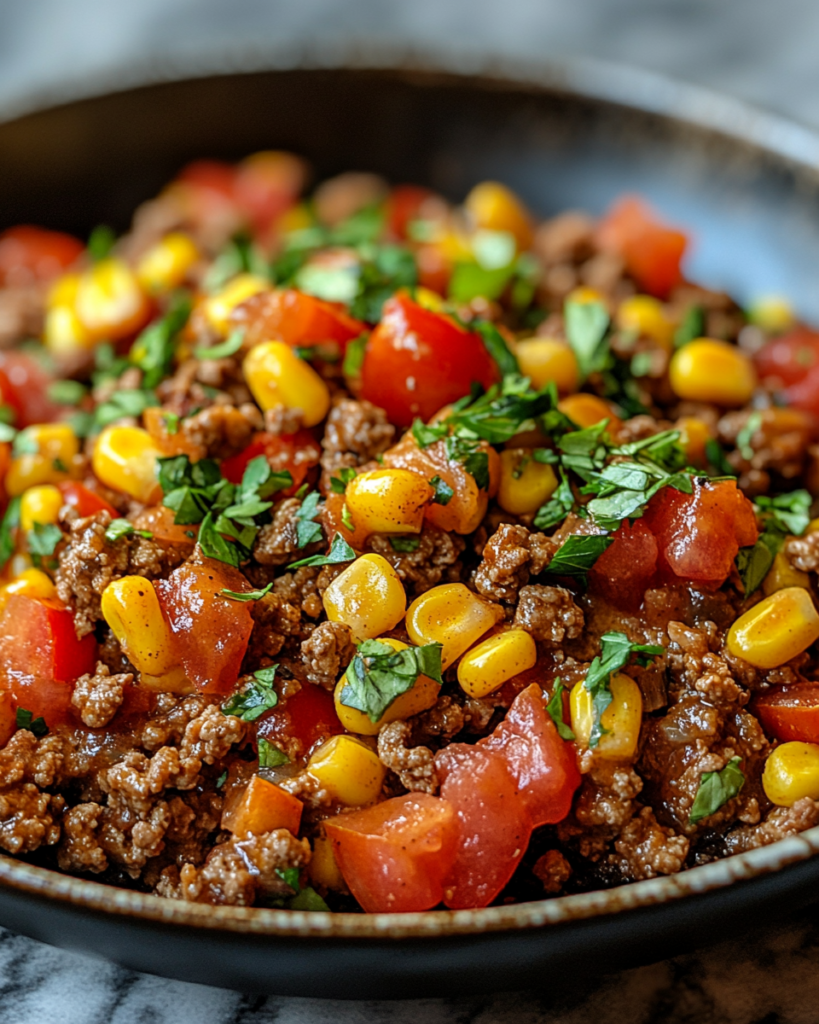
Taco beef skillet brings bold Tex-Mex flavor into a single pan with minimal effort and maximum comfort. This dish combines seasoned ground beef, tender vegetables, and melted cheese in a way that feels hearty and satisfying without complicated steps.
It is the kind of meal that fits busy weeknights, casual gatherings, or any time a warm, savory dinner is needed fast. The layers of spice, tomato richness, and creamy toppings create a balanced skillet dish that feels complete on its own.
Taco beef skillet is flexible, meaning it works with pantry staples and adapts easily to what is available in the kitchen. Whether served straight from the pan or paired with simple sides, it delivers consistent flavor and texture in every bite.
Ingredients Overview
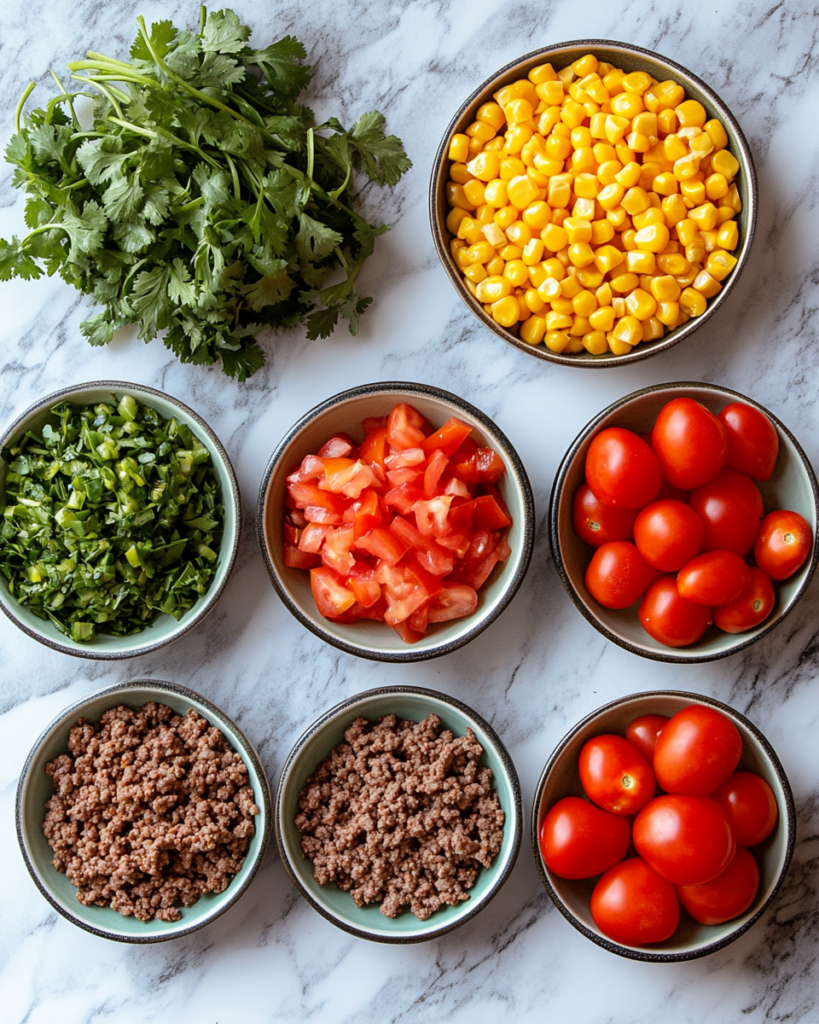
Taco beef skillet relies on a handful of familiar ingredients that come together to build deep, layered flavor. Ground beef is the foundation, providing richness and a savory base that absorbs seasoning well. A leaner beef can be used for a lighter result, while ground turkey or chicken also works for a different profile.
Onion and garlic add aromatic depth, softening as they cook with the beef. Bell peppers contribute slight sweetness and color, balancing the bold spices. Tomatoes, usually in the form of diced canned tomatoes or tomato sauce, bring moisture and tang that tie everything together.
Taco seasoning introduces warmth and complexity, often combining chili powder, cumin, paprika, and oregano. This seasoning blend defines the character of taco beef skillet, giving it that familiar Tex-Mex taste. If a pre-made packet is not available, a homemade mix works just as well.
Corn and beans are optional additions that increase texture and heartiness. Black beans are especially common, adding fiber and a creamy bite. Corn provides bursts of sweetness that contrast nicely with the savory beef.
Cheese is the finishing layer, melting into the hot skillet for a creamy, slightly stretchy topping. Cheddar, Monterey Jack, or a blend of both works well. Fresh toppings such as cilantro, sour cream, or sliced jalapeños can be added just before serving to brighten the dish.
Together, these ingredients create a skillet meal that is rich, balanced, and adaptable. Each component plays a role in building flavor while keeping preparation straightforward and approachable.
Ingredients
1 pound ground beef
1 medium yellow onion, diced
3 cloves garlic, minced
1 red bell pepper, chopped
1 can (14 ounces) diced tomatoes
1/2 cup tomato sauce
2 tablespoons taco seasoning
1/2 teaspoon salt
1/4 teaspoon black pepper
1 cup black beans, drained and rinsed
1/2 cup corn kernels
1 cup shredded cheddar cheese
1/2 cup shredded Monterey Jack cheese
1 tablespoon olive oil
1/4 cup chopped fresh cilantro
1/2 cup sour cream (for serving)
1 jalapeño, sliced (optional)
Step-by-Step Instructions
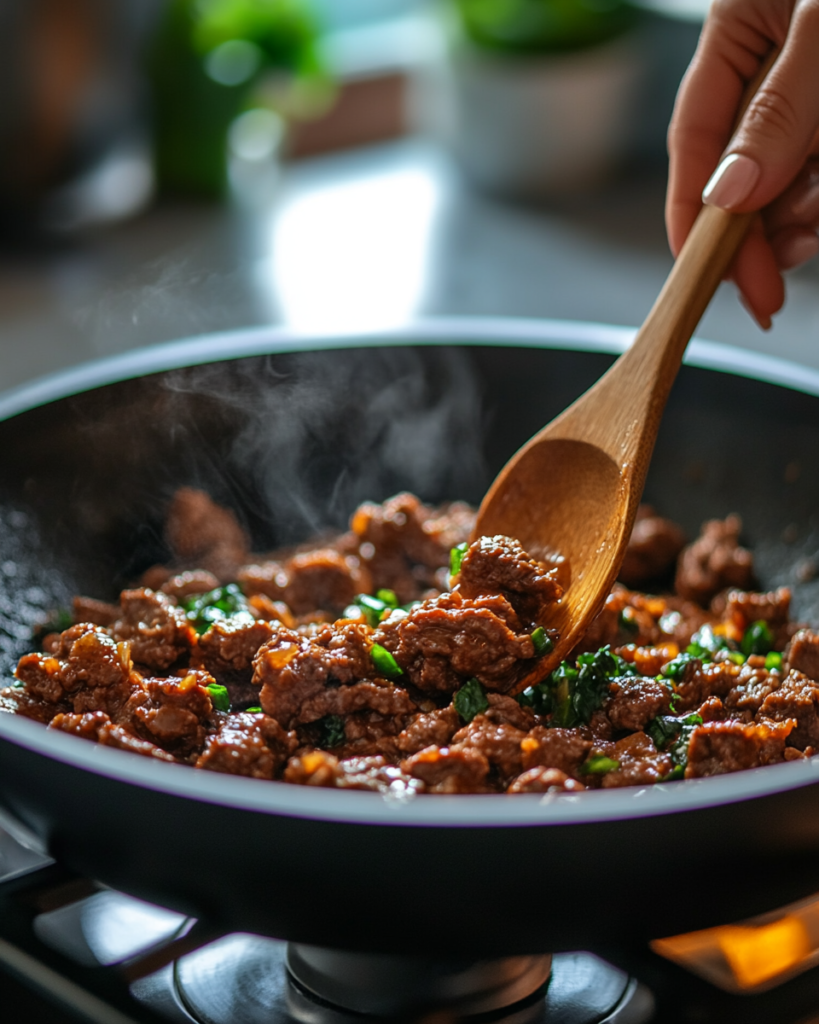
Start by heating a large skillet over medium heat and adding olive oil. Once warm, add the diced onion and cook until it becomes soft and slightly translucent. This usually takes about 3 to 4 minutes and creates a flavorful base for the taco beef skillet.
Add the ground beef to the skillet, breaking it apart with a spoon or spatula. Cook until browned completely, with no pink remaining. Drain excess fat if needed, especially when using higher-fat beef. Stir in minced garlic and cook briefly until fragrant.
Add chopped bell pepper and cook for another 3 to 4 minutes. The pepper should soften slightly but still maintain some texture. Stir in taco seasoning, salt, and black pepper, coating the beef evenly so the spices bloom in the heat.
Pour in diced tomatoes and tomato sauce, mixing everything thoroughly. The mixture should become slightly saucy while still thick enough to hold together. Add black beans and corn, stirring gently so they distribute evenly throughout the skillet.
Reduce heat to low and let the mixture simmer for about 8 to 10 minutes. This allows the flavors to blend and the sauce to thicken slightly. Stir occasionally to prevent sticking at the bottom of the pan.
Sprinkle shredded cheddar and Monterey Jack cheese evenly over the top. Cover the skillet with a lid and let the cheese melt completely, forming a smooth, creamy layer across the surface.
Once the cheese has melted, remove the skillet from heat. Top with fresh cilantro and optional jalapeño slices for added freshness and heat. Serve warm directly from the pan for the best texture and flavor experience.
Tips, Variations & Substitutions
Taco beef skillet can be adjusted easily depending on taste and ingredients on hand. For a lighter version, ground turkey or ground chicken works well while still holding seasoning effectively. If a richer taste is preferred, using a higher fat beef adds more depth.
Vegetables can be changed based on preference. Zucchini, mushrooms, or spinach can be added without altering the structure of the dish. These additions blend well with the tomato base and absorb the seasoning nicely.
For extra spice, add crushed red pepper flakes or diced jalapeños during cooking. For a milder version, reduce taco seasoning slightly and rely more on tomatoes for flavor balance.
Cheese variations can also change the final texture. Pepper Jack adds heat, while a Mexican blend creates a smoother melt. Dairy-free cheese alternatives can be used if needed without changing the cooking process.
Serving Ideas & Occasions
Taco beef skillet is often served as a stand-alone dish, but it pairs well with simple sides. Warm tortillas, rice, or crispy tortilla chips complement the skillet’s rich texture. A side salad with lime dressing adds freshness and balance.
It works well for casual family dinners, game nights, or shared meals where food is served directly from the pan. The skillet presentation keeps serving simple and interactive.
Beverage pairings like iced tea, sparkling water with lime, or light soda match the bold flavors without overpowering them. The dish also reheats well, making it suitable for meal prep or next-day lunches.
Nutritional & Health Notes
Taco beef skillet provides a balance of protein, carbohydrates, and fats. Ground beef supplies protein and iron, while beans contribute fiber and plant-based protein. Vegetables add vitamins and minerals that support overall nutrition.
Cheese increases calcium content but also adds saturated fat, so portion size can be adjusted based on dietary needs. Using lean beef or turkey reduces overall fat content while keeping protein levels steady.
Tomatoes contribute antioxidants such as lycopene, and corn adds natural sweetness along with carbohydrates for energy. This combination creates a filling meal that supports sustained fullness.
The dish can be modified for different dietary goals by adjusting cheese amounts, choosing leaner proteins, or increasing vegetable content.
FAQs
Can taco beef skillet be made ahead of time?
Yes, taco beef skillet can be prepared in advance and stored in the refrigerator for up to three days. The flavors often become deeper after resting, as the seasoning continues to blend with the beef and vegetables. When reheating, add a small splash of water or tomato sauce to bring back moisture and prevent dryness. It reheats well on the stovetop over low heat or in a microwave. This makes it a convenient option for meal prep or planning several meals ahead without losing quality or texture.
What type of beef works best for this skillet?
Ground beef with a moderate fat content, such as 85/15 or 90/10, works well for taco beef skillet. The fat adds flavor while still keeping the dish from becoming overly greasy. Leaner beef can be used for a lighter version, though it may need a small amount of added oil during cooking. Ground turkey or chicken are also suitable alternatives and absorb taco seasoning effectively. Each option slightly changes the final flavor profile, but all maintain the core structure of the dish.
Can taco beef skillet be frozen?
Yes, taco beef skillet freezes well without the cheese topping. Allow the cooked mixture to cool completely before transferring it to airtight containers. It can be frozen for up to two months. When ready to use, thaw overnight in the refrigerator and reheat on the stovetop. Add fresh cheese after reheating for best texture. The beans, meat, and sauce hold up well during freezing, making it a practical option for batch cooking and future meals.
What vegetables can be added?
Taco beef skillet is flexible when it comes to vegetables. Zucchini, mushrooms, spinach, and even chopped carrots can be added during cooking. These vegetables blend well with the tomato base and absorb the seasoning. Bell peppers are commonly used, but mixing colors like red, yellow, and green adds visual appeal and slight flavor differences. Adding vegetables increases volume and nutrition without changing the core taste of the dish.
Is taco beef skillet spicy?
The spice level depends on the taco seasoning used. Most standard blends offer mild to medium heat. For a spicier version, add jalapeños, chili flakes, or hot sauce during cooking. For a milder version, reduce the seasoning amount slightly or choose a mild taco blend. The cheese and sour cream toppings also help balance heat, making it easy to adjust the dish to different preferences at the table.
What toppings go well with it?
Common toppings include sour cream, chopped cilantro, diced tomatoes, sliced jalapeños, and avocado. These additions bring freshness and contrast to the rich beef mixture. Crushed tortilla chips can also be sprinkled on top for added crunch. Lime juice adds brightness and lifts the overall flavor. Toppings are best added just before serving to keep textures fresh and distinct.
Can taco beef skillet be made dairy-free?
Yes, taco beef skillet can be made without dairy by simply omitting the cheese and sour cream. The base mixture still has strong flavor from the seasoning, tomatoes, and beef. Dairy-free cheese alternatives can be used if a creamy topping is desired. Avocado is another good substitute, adding richness and smooth texture without dairy. The dish remains hearty and satisfying even without traditional cheese elements.